
How to Architect Multi-Tenant SaaS Applications
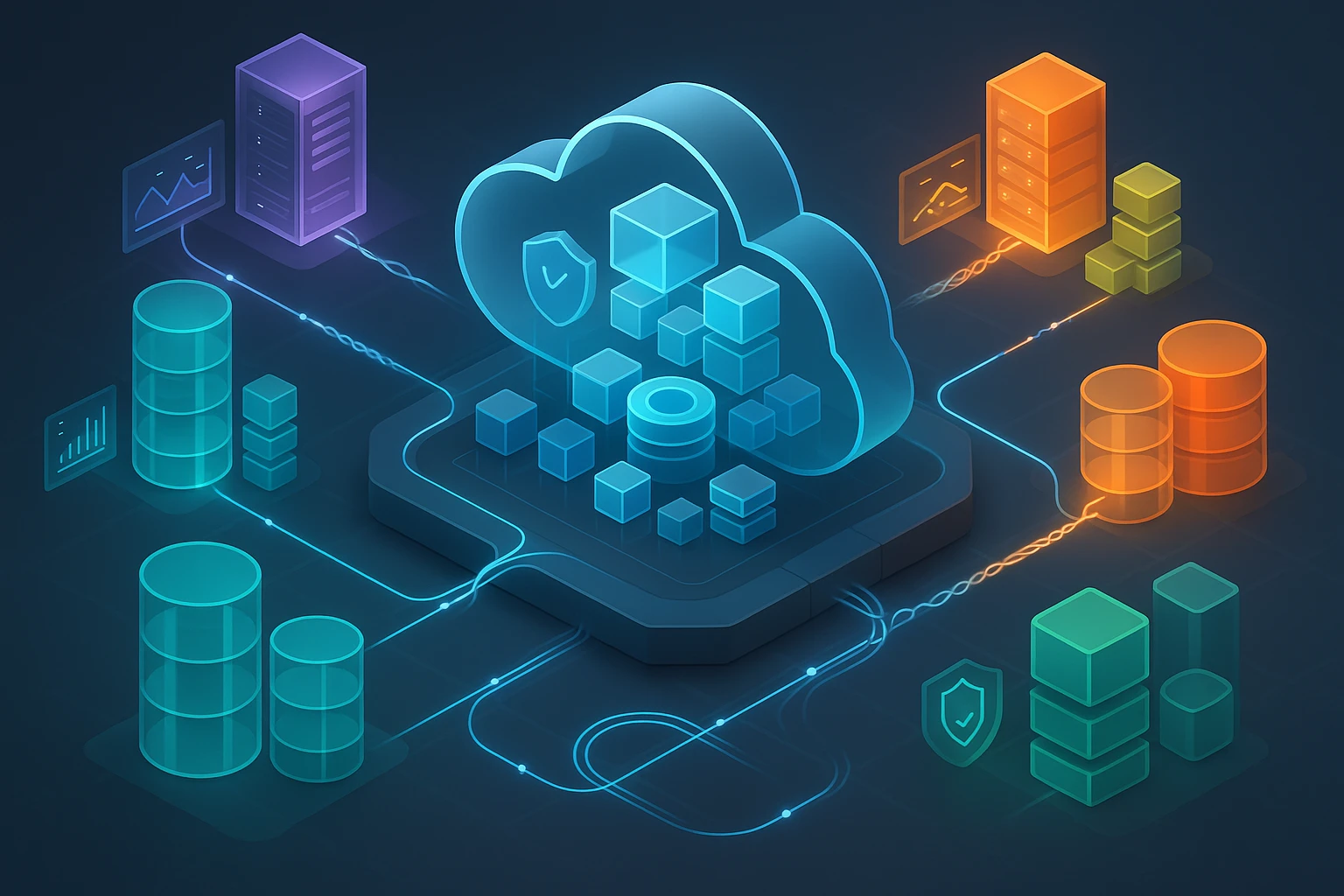
Multi-Tenant SaaS Architecture Guide
The decision to architect a multi-tenant SaaS application represents one of the most critical technical choices that will shape your product's future. This architectural approach determines not just how efficiently your application serves customers, but fundamentally impacts your ability to scale, maintain security boundaries, and ultimately deliver value profitably. For startups racing to market and enterprises expanding their digital offerings alike, understanding the nuances of multi-tenant architecture can mean the difference between sustainable growth and technical debt that cripples innovation.
Multi-tenant architecture refers to a software design pattern where a single instance of an application serves multiple customers, or "tenants," while keeping their data isolated and secure. Unlike single-tenant systems where each customer receives their own dedicated infrastructure, multi-tenancy enables resource sharing that drives operational efficiency. This comprehensive guide examines the architectural patterns, data isolation strategies, security considerations, and implementation approaches that define successful multi-tenant SaaS platforms from multiple perspectives—technical, business, and operational.
Throughout this exploration, you'll discover practical frameworks for choosing the right tenancy model for your specific context, detailed implementation strategies for data isolation and security, performance optimization techniques that maintain experience quality across tenants, and real-world considerations for scaling your architecture as your customer base grows. Whether you're designing your first SaaS product or re-architecting an existing platform, these insights will equip you with the knowledge to make informed architectural decisions that align technical capabilities with business objectives.
Understanding Multi-Tenancy Models and Their Trade-offs
The foundation of any multi-tenant architecture begins with selecting the appropriate tenancy model. This choice reverberates through every subsequent technical decision, affecting everything from database design to deployment strategies. Three primary models dominate the landscape, each offering distinct advantages and challenges that must be weighed against your specific requirements.
The single-tenant architecture, while technically not multi-tenant, serves as an important reference point. Each customer receives completely isolated infrastructure—separate databases, application instances, and often dedicated servers. This approach maximizes customization potential and provides the strongest security guarantees, but comes at the cost of operational complexity and higher infrastructure expenses. Organizations serving enterprise clients with stringent compliance requirements or those needing extensive customization often gravitate toward this model despite its inefficiencies.
At the opposite end of the spectrum lies pure multi-tenancy, where all customers share the same application instance and database, with tenant identification managed through data-level discrimination. A single PostgreSQL database might contain a tenant_id column in every table, ensuring logical separation while maximizing resource utilization. This approach delivers exceptional cost efficiency and simplifies deployment pipelines, but introduces challenges around noisy neighbor problems, where one tenant's resource consumption impacts others, and requires meticulous attention to data isolation at the application layer.
"The most common mistake in multi-tenant architecture is choosing your isolation model based on what's easiest to build rather than what your business model actually requires. The cost of changing this decision later is astronomical."
Between these extremes exists the hybrid approach, which combines elements of both models to balance their respective trade-offs. Common implementations include database-per-tenant architectures where each customer receives their own database schema while sharing application infrastructure, or tiered models where premium customers receive dedicated resources while standard users share infrastructure. This flexibility enables architects to align technical resources with customer value, but introduces operational complexity in managing multiple deployment patterns simultaneously.
| Tenancy Model | Resource Efficiency | Isolation Strength | Operational Complexity | Best Suited For |
|---|---|---|---|---|
| Single-Tenant | Low | Maximum | High | Enterprise customers, regulated industries, high customization needs |
| Pure Multi-Tenant | Maximum | Application-level | Low | High-volume SMB customers, standardized offerings, cost-sensitive markets |
| Hybrid (Database-per-Tenant) | Medium | High | Medium | Mid-market customers, compliance requirements, balanced approach |
| Hybrid (Tiered) | Variable | Variable | High | Diverse customer segments, premium differentiation strategies |
The selection process should begin with honest assessment of your target market and business model. A B2B SaaS platform targeting Fortune 500 companies faces fundamentally different requirements than a consumer-facing application serving millions of small users. Consider not just your current needs but your three-year trajectory—while it's possible to migrate between models, the effort involved often rivals rebuilding the application from scratch.
Financial modeling plays a crucial role in this decision. Calculate your customer acquisition cost, lifetime value, and gross margins under different architectural scenarios. Pure multi-tenancy might reduce infrastructure costs by 70% compared to single-tenant approaches, but if your average contract value is $100,000 annually, those savings may be less significant than the competitive advantage of offering stronger isolation guarantees. Conversely, if you're targeting small businesses at $50 monthly subscriptions, operational efficiency becomes paramount to achieving profitability.
Data Isolation Strategies and Implementation Patterns
Once you've selected your tenancy model, implementing robust data isolation becomes the cornerstone of your architecture. This goes far beyond simply adding a tenant_id column to your tables—it requires comprehensive strategies spanning database design, application logic, and operational procedures to ensure tenant data never leaks across boundaries.
For shared database architectures, the tenant discriminator pattern forms the foundation. Every query must include tenant context, typically enforced through multiple defensive layers. At the database level, implement row-level security policies that automatically filter results based on the current session's tenant context. PostgreSQL's Row Level Security (RLS) policies, for example, can enforce tenant isolation at the database engine level, providing a critical safety net even if application code contains bugs.
Application-level isolation requires establishing tenant context early in the request lifecycle and maintaining it throughout. Middleware components should extract tenant identification from authentication tokens, subdomain routing, or custom headers, then inject this context into all downstream operations. Object-relational mappers should be configured with global filters that automatically append tenant conditions to every query, eliminating the possibility of accidentally querying across tenant boundaries.
"Data isolation isn't just a technical requirement—it's a trust requirement. A single data leak can destroy years of reputation building and customer confidence. Design your isolation strategy assuming that every other layer will fail."
The database-per-tenant approach shifts isolation to the infrastructure layer, providing stronger guarantees but introducing new challenges. Connection pooling becomes more complex when managing hundreds or thousands of database instances. Strategies include dynamic connection pool management where connections are created on-demand and cached per tenant, or connection routing layers that map tenant identifiers to appropriate database endpoints. Tools like PgBouncer or ProxySQL can help manage this complexity, but require careful configuration to avoid becoming bottlenecks.
Schema migrations in multi-tenant environments demand special attention. In shared database architectures, migrations must be backward-compatible and execute quickly to avoid locking tables that serve all tenants. Blue-green deployment strategies where new schema versions coexist with old ones during transition periods help maintain availability. For database-per-tenant models, migrations must be orchestrated across all tenant databases, potentially thousands of them, requiring robust tooling to track completion status and handle failures gracefully.
Implementing Tenant Context Propagation
Tenant context must flow seamlessly through your entire application stack, from the API gateway through microservices to background jobs and scheduled tasks. Establishing this context propagation correctly prevents entire categories of security vulnerabilities and data leakage scenarios.
- 🔐 Authentication Layer Integration: Extract tenant identification during the authentication process, embedding it within JWT tokens or session data where subsequent services can access it without additional lookups
- 🌐 Request-Scoped Context: Utilize thread-local storage or async context managers to maintain tenant context throughout request processing without explicitly passing it through every function call
- 📡 Service-to-Service Communication: Propagate tenant context across service boundaries using custom headers in HTTP calls or metadata in gRPC requests, ensuring downstream services maintain isolation
- ⚙️ Background Job Processing: Serialize tenant context into job payloads so that asynchronous operations execute within the correct tenant scope, particularly critical for delayed jobs that might execute hours or days later
- 📊 Analytics and Logging: Include tenant identifiers in all log entries and metrics to enable tenant-specific debugging and usage analysis while maintaining privacy boundaries
Testing data isolation requires dedicated strategies beyond typical functional testing. Implement automated tests that deliberately attempt to access data across tenant boundaries, verifying that security policies correctly prevent unauthorized access. Penetration testing should specifically target multi-tenant boundaries, using one tenant's credentials to probe for access to another tenant's data. Regular audits of database queries in production can identify queries missing tenant filters before they cause actual data leakage.
Security Architecture for Multi-Tenant Environments
Security in multi-tenant architectures extends far beyond data isolation, encompassing authentication, authorization, network security, and compliance considerations. The shared infrastructure model introduces attack vectors that don't exist in single-tenant deployments, requiring layered security approaches that assume breach at every level.
Authentication mechanisms must balance security with user experience across tenant boundaries. Single Sign-On (SSO) integration becomes more complex when each tenant may use different identity providers—one tenant might use Okta, another Azure AD, and a third Google Workspace. Your authentication layer needs to dynamically route authentication requests to the appropriate provider based on tenant context, typically determined by subdomain or email domain. Implementing this requires maintaining a mapping between tenants and their configured identity providers, with fallback mechanisms for tenants not using SSO.
Authorization models in multi-tenant systems typically implement role-based access control (RBAC) or attribute-based access control (ABAC) scoped to each tenant. A user who is an administrator in one tenant should have no privileges in another tenant, even if they somehow obtain access. This requires authorization checks to always consider two dimensions: the user's identity and the tenant context. Hierarchical permission models where organizations contain teams and teams contain users add additional complexity, requiring careful design to avoid authorization bypass vulnerabilities.
| Security Layer | Implementation Approach | Key Considerations | Common Pitfalls |
|---|---|---|---|
| Authentication | Multi-provider SSO with tenant-specific routing | Provider discovery, session management, token validation | Failing to validate tenant context in tokens, allowing token reuse across tenants |
| Authorization | Tenant-scoped RBAC with hierarchical permissions | Permission inheritance, role assignment, privilege escalation prevention | Checking only user permissions without verifying tenant membership |
| Network Security | Tenant isolation through network policies and encryption | Inter-service communication, data in transit, API gateway security | Assuming internal network traffic is trusted without encryption |
| Data Encryption | Encryption at rest with tenant-specific keys | Key management, performance impact, compliance requirements | Using shared encryption keys across all tenants |
"In multi-tenant architectures, defense in depth isn't optional—it's the only viable security strategy. Every layer must assume that the layers above and below it have been compromised."
Encryption strategies for multi-tenant systems should consider both data at rest and data in transit. While encrypting data at rest using database-level encryption provides baseline protection, some compliance frameworks require tenant-specific encryption keys, enabling customers to maintain control over their own data encryption. This introduces significant complexity in key management, requiring secure key storage solutions like AWS KMS or HashiCorp Vault, and careful handling of key rotation without causing downtime.
Network segmentation in containerized or serverless multi-tenant deployments requires thoughtful design. Even when tenants share application infrastructure, network policies can provide additional isolation layers. Kubernetes Network Policies, for example, can restrict which pods can communicate with each other, limiting the blast radius if one component is compromised. Service mesh technologies like Istio add mutual TLS between services automatically, ensuring that even internal communication is encrypted and authenticated.
Compliance and Regulatory Considerations
Multi-tenant architectures face unique challenges in meeting compliance requirements across different regulatory frameworks. Your system might simultaneously need to comply with GDPR for European customers, HIPAA for healthcare clients, and SOC 2 for enterprise buyers, each with distinct requirements around data handling, encryption, and audit logging.
Data residency requirements pose particular challenges when tenants sharing infrastructure are subject to different regulations. A tenant in Germany might require that all their data remains within EU borders, while a US-based tenant has no such restrictions. Architectural approaches to address this include geographic tenant sharding where tenants are assigned to region-specific infrastructure based on their data residency requirements, or hybrid models where metadata is globally replicated but actual customer data remains in specified regions.
Audit logging in multi-tenant environments must capture not just what actions occurred, but crucially, in which tenant context. Every significant operation—data access, configuration changes, user management actions—should generate audit events that include tenant identifiers, user identities, timestamps, and the action performed. These logs must be immutable and retained according to the most stringent compliance requirement across all your tenants. Centralized logging systems like ELK stack or cloud-native solutions like AWS CloudWatch Logs provide the infrastructure, but your application must generate sufficiently detailed events.
Performance Optimization and Resource Management
Maintaining consistent performance across tenants represents one of the most challenging aspects of multi-tenant architecture. The noisy neighbor problem—where one tenant's resource consumption degrades performance for others—can undermine the cost benefits of shared infrastructure if not properly addressed through proactive resource management and isolation techniques.
Database performance in multi-tenant systems requires careful attention to query patterns and indexing strategies. In shared database architectures, every table typically includes a tenant_id column that must be part of most indexes. Composite indexes that include tenant_id as the first column enable efficient tenant-scoped queries, but index proliferation can impact write performance. Query planning should account for the fact that tenant data distributions are often highly skewed—one tenant might have millions of records while another has hundreds.
Connection pooling strategies must balance resource utilization against tenant isolation. In database-per-tenant architectures, maintaining dedicated connection pools for each tenant would exhaust system resources with hundreds of tenants. Instead, implement dynamic pooling where connections are allocated on-demand and released back to a global pool after use. Connection pool sizing should account for both the number of active tenants and their typical concurrency patterns, with monitoring to detect when pool exhaustion is approaching.
"Performance isolation is just as important as data isolation. A tenant paying $100 monthly shouldn't experience degraded service because another tenant paying the same amount decided to run a massive export job."
Rate limiting and throttling protect shared resources from excessive consumption by any single tenant. Implement rate limits at multiple levels: API endpoints to prevent request floods, database query execution to limit long-running queries, and background job processing to prevent one tenant from monopolizing worker resources. These limits should be tenant-aware, potentially varying based on subscription tier, with clear error messages that help users understand when they've hit limits and how to request increases.
Caching strategies in multi-tenant environments must carefully consider tenant boundaries. A naive caching implementation might accidentally serve cached data from one tenant to another if cache keys don't include tenant identifiers. Implement tenant-scoped caching where cache keys always include tenant context, and consider tenant-level cache invalidation strategies that clear all cached data for a specific tenant without affecting others. Distributed caching systems like Redis can be partitioned by tenant or use key prefixing to maintain isolation.
Scaling Strategies for Growing Tenant Bases
As your application grows from dozens to hundreds or thousands of tenants, scaling strategies must evolve beyond simple vertical or horizontal scaling of individual components. Strategic tenant placement and rebalancing become critical operational capabilities.
- 📈 Tenant Sharding: Distribute tenants across multiple database clusters based on characteristics like size, activity level, or geographic location, enabling independent scaling of each shard
- ⚖️ Load-Based Rebalancing: Monitor resource consumption per tenant and migrate high-usage tenants to dedicated infrastructure or less-loaded shards to prevent noisy neighbor issues
- 🎯 Tiered Infrastructure: Segment infrastructure into tiers aligned with subscription levels, ensuring premium customers receive dedicated resources while standard users share efficiently
- 🔄 Elastic Scaling: Implement auto-scaling policies that respond to aggregate load across all tenants, but with safeguards to prevent single-tenant spikes from triggering unnecessary scaling
- 📊 Capacity Planning: Develop models that predict infrastructure needs based on tenant growth patterns, average tenant size, and usage seasonality to stay ahead of scaling requirements
Monitoring and observability in multi-tenant environments require specialized approaches. Traditional monitoring focused on system-level metrics like CPU and memory usage remains important, but tenant-level metrics provide actionable insights. Track metrics like queries per second per tenant, API latency by tenant, and resource consumption by tenant to identify problematic tenants before they impact others. Alerting should distinguish between system-wide issues affecting all tenants and tenant-specific problems that might indicate abuse or misconfiguration.
Background job processing presents unique challenges in multi-tenant systems. A simple queue where all tenants' jobs intermingle can lead to one tenant's batch processing job blocking time-sensitive jobs from other tenants. Implement tenant-aware job queues with priority levels, potentially maintaining separate queues per tenant or tenant tier. Job execution should include tenant context and respect the same resource limits as synchronous API requests, preventing background jobs from becoming a backdoor for excessive resource consumption.
Operational Excellence and Maintenance Strategies
Operating a multi-tenant SaaS platform requires operational practices that account for the shared nature of infrastructure while maintaining the ability to address tenant-specific issues. The operational model must balance efficiency gains from shared infrastructure against the need for tenant-specific customization and troubleshooting.
Deployment strategies for multi-tenant applications must minimize risk while maintaining rapid iteration velocity. Blue-green deployments where new versions are deployed alongside existing versions before traffic cutover provide safety, but in multi-tenant contexts, consider phased rollouts where new versions are initially deployed to a subset of tenants—perhaps internal test accounts or early adopter customers who've opted into beta features. This canary deployment approach limits blast radius if issues emerge.
Feature flag systems become essential in multi-tenant environments, enabling different feature sets across tenants without maintaining separate code branches. A tenant might pay for premium features that others don't access, or you might pilot new capabilities with specific customers before broader release. Implement feature flags at the tenant level, with the ability to enable features for individual tenants, tenant tiers, or based on custom attributes. This flexibility supports both business model requirements and risk management.
"The most successful multi-tenant platforms treat operations as a product feature, not an afterthought. Your operational capabilities directly impact your ability to deliver on SLA commitments and customer satisfaction."
Incident response in multi-tenant environments requires determining whether issues affect all tenants or specific ones. Monitoring dashboards should provide both system-wide views and tenant-specific drill-downs. When an incident occurs, quickly identifying the scope—is this a platform-wide outage or a single-tenant issue?—determines the appropriate response. Maintain runbooks for common scenarios like tenant-specific performance degradation, database connection pool exhaustion, or cascading failures from one tenant's unusual usage pattern.
Backup and disaster recovery strategies must account for tenant-level granularity. While system-wide backups provide baseline protection, the ability to restore individual tenant data becomes critical when a tenant accidentally deletes important information or needs to recover from their own application errors. In shared database architectures, this requires logical backups that can extract and restore individual tenant data. For database-per-tenant models, backup orchestration across potentially thousands of databases demands robust automation and verification.
Tenant Lifecycle Management
Managing the complete lifecycle of tenants—from initial provisioning through growth, potential migration between infrastructure tiers, and eventual offboarding—requires dedicated systems and processes that many development teams underestimate in complexity.
Tenant provisioning should be fully automated, creating all necessary resources—database schemas, storage buckets, cache namespaces, configuration entries—through infrastructure-as-code approaches. The provisioning process must be idempotent and include validation steps to ensure the tenant environment is fully functional before allowing access. Consider implementing tenant templates that encode different configurations for different subscription tiers or customer segments, enabling consistent provisioning across similar tenants.
Tenant migration between infrastructure tiers or regions represents one of the most operationally complex scenarios. A customer growing from small business to enterprise might need migration from shared infrastructure to dedicated resources, requiring data transfer, DNS updates, and careful coordination to minimize downtime. Build migration tooling early, even if initially used infrequently, as the ability to migrate tenants provides crucial flexibility for optimizing infrastructure utilization and meeting customer requirements.
Offboarding tenants—whether due to churn, acquisition, or other reasons—must follow defined data retention and deletion policies. Regulatory requirements like GDPR's right to erasure mandate complete data deletion upon request. Implement tenant deletion workflows that remove all tenant data across all systems—databases, file storage, caches, backups, and logs—with audit trails proving complete removal. Consider retention periods for billing and legal purposes, but clearly separate retained data from active production systems.
Cost Optimization and Resource Efficiency
The economic viability of multi-tenant SaaS platforms depends on achieving economies of scale through efficient resource sharing while maintaining quality of service. Cost optimization requires understanding the relationship between tenant density, resource utilization, and infrastructure expenses across the entire stack.
Infrastructure cost allocation in multi-tenant environments presents accounting challenges. Shared resources like application servers, load balancers, and network infrastructure serve all tenants collectively, making per-tenant cost calculation complex. Develop models that allocate shared costs based on usage metrics—API requests, data storage, compute time—to understand unit economics per tenant. This visibility enables identifying unprofitable customers and informing pricing decisions.
Database costs often dominate infrastructure expenses in data-intensive SaaS applications. In shared database architectures, storage costs scale with total data across all tenants, but compute costs depend on query patterns and concurrency. Monitor query performance per tenant to identify optimization opportunities—a single tenant's inefficient queries might be driving database instance upsizing that affects your entire cost structure. For database-per-tenant models, right-sizing individual tenant databases based on their actual usage prevents overprovisioning.
"Cost optimization in multi-tenant systems isn't about being cheap—it's about aligning infrastructure costs with customer value delivery. Understanding your unit economics per tenant enables sustainable growth."
Storage optimization strategies should address both active data and historical records. Implement data lifecycle policies that automatically archive older data to cheaper storage tiers—moving infrequently accessed records from primary databases to object storage like S3. For tenants with significant data growth, consider compression strategies and data retention policies that balance compliance requirements against storage costs. Communicate clearly with customers about data retention periods and archival policies to set appropriate expectations.
Compute resource optimization requires matching infrastructure capacity to actual demand patterns. Multi-tenant applications often experience aggregate demand that's smoother than individual tenant patterns—when one tenant's usage drops, another's rises, creating natural load balancing. Leverage this through auto-scaling policies that respond to aggregate metrics rather than individual tenant spikes. However, maintain ceiling limits to prevent runaway costs from unexpected usage patterns or potential abuse.
Pricing Model Alignment with Architecture
Your pricing model should align with your architectural choices and cost drivers. Misalignment creates situations where customer usage patterns that you've priced attractively actually harm your margins, or where your most expensive infrastructure capabilities aren't reflected in pricing.
- 💰 Usage-Based Pricing: When infrastructure costs scale linearly with usage metrics like API calls or storage, usage-based pricing naturally aligns costs with revenue
- 👥 Per-Seat Pricing: Works well when per-user costs are predictable and infrastructure scales with user count rather than usage intensity
- 📦 Tiered Pricing: Enables infrastructure optimization by grouping similar tenants, with tier boundaries reflecting actual cost inflection points
- 🎯 Value-Based Pricing: Prices based on customer value rather than costs, but requires understanding cost floor to ensure profitability
- 🔄 Hybrid Models: Combine base subscription fees covering baseline infrastructure with usage charges for variable costs, aligning incentives
Reserved capacity and commitment-based pricing from infrastructure providers can significantly reduce costs for predictable baseline load. If you know you'll always need capacity for at least 100 tenants, reserving that infrastructure through annual commitments to AWS, Azure, or GCP can reduce costs by 30-60% compared to on-demand pricing. Layer auto-scaling on-demand capacity on top of this reserved baseline to handle growth and variability.
Monitoring cost efficiency requires tracking metrics beyond absolute infrastructure spend. Calculate cost per tenant, cost per active user, and cost per unit of value delivered (transactions processed, reports generated, etc.). Track these metrics over time to identify trends—improving efficiency should show decreasing per-unit costs as you optimize, while degrading efficiency signals technical debt or architectural issues requiring attention.
Technology Stack Considerations and Tool Selection
Selecting the right technology stack for multi-tenant SaaS applications requires evaluating how well different technologies support multi-tenancy patterns, from databases that provide robust isolation features to application frameworks that simplify tenant context management. The wrong choices early can create technical debt that becomes increasingly expensive to address as your platform matures.
Database selection fundamentally impacts your multi-tenancy implementation approach. PostgreSQL offers excellent multi-tenancy support through row-level security policies, schema-per-tenant capabilities, and robust JSONB support for flexible tenant-specific configurations. MySQL and MariaDB provide solid performance for shared-table multi-tenancy but lack some of PostgreSQL's advanced isolation features. NoSQL databases like MongoDB support multi-tenancy through collection-per-tenant or document-level tenant discrimination, but require more application-level isolation enforcement.
For database-per-tenant architectures, cloud-native database services like Amazon RDS, Azure SQL Database, or Google Cloud SQL simplify operations but introduce cost considerations—hundreds of individual database instances can become expensive. Serverless database options like Aurora Serverless or Azure SQL Database Serverless provide automatic scaling and pay-per-use pricing that can improve economics for tenants with variable usage patterns.
Application framework selection should consider built-in multi-tenancy support. Frameworks like Django include middleware systems perfect for injecting tenant context, while Ruby on Rails' Apartment gem provides battle-tested multi-tenancy patterns. For Node.js applications, libraries like Sequelize support tenant-aware models, though you'll need to build more infrastructure yourself. Evaluate whether frameworks provide tenant context propagation, automatic query filtering, and schema management tools that align with your chosen tenancy model.
Containerization and orchestration platforms like Kubernetes offer compelling advantages for multi-tenant SaaS. Container isolation provides security boundaries between tenants when using dedicated instances per tenant, while resource quotas and limits prevent noisy neighbor problems in shared deployments. Kubernetes namespaces can represent tenant boundaries, with network policies enforcing isolation. However, Kubernetes complexity requires investment in operational expertise—ensure your team can effectively operate the platform before committing.
Essential Tooling for Multi-Tenant Operations
Beyond core application infrastructure, successful multi-tenant platforms require specialized tooling for operations, monitoring, and tenant management that may not be obvious during initial development.
- 🔍 Tenant-Aware Monitoring: Tools like Datadog, New Relic, or Prometheus with custom metrics that track performance and resource usage per tenant, not just system-wide
- 🎛️ Feature Flag Systems: LaunchDarkly, Split, or Unleash for managing tenant-specific feature rollouts and A/B testing across tenant segments
- 📋 Schema Migration Tools: Flyway, Liquibase, or custom solutions that handle migrations across multiple tenant databases with rollback capabilities
- 🔐 Secret Management: HashiCorp Vault, AWS Secrets Manager, or Azure Key Vault for managing tenant-specific secrets like API keys and encryption keys
- 📊 Analytics Platforms: Segment, Mixpanel, or custom solutions that provide tenant-level usage analytics while maintaining data isolation
API gateway selection impacts your ability to implement tenant-specific rate limiting, routing, and authentication. Solutions like Kong, Tyk, or cloud-native options like AWS API Gateway provide tenant identification, request routing based on tenant context, and rate limiting per tenant. Evaluate whether gateways support your authentication model—particularly if implementing multi-provider SSO—and whether they can extract tenant context from various sources like subdomains, headers, or JWT claims.
Observability platforms must support tenant-scoped investigation. When a tenant reports an issue, you need to quickly filter logs, traces, and metrics to just that tenant's activity. Distributed tracing systems like Jaeger or Zipkin should propagate tenant context through traces, enabling you to follow a request's path through your microservices architecture while maintaining tenant context. Log aggregation platforms like ELK, Splunk, or cloud-native solutions should index tenant identifiers for efficient filtering.
Testing Strategies for Multi-Tenant Applications
Testing multi-tenant applications requires strategies beyond typical software testing approaches, specifically addressing tenant isolation, cross-tenant security, and the unique failure modes that emerge from shared infrastructure. Comprehensive testing builds confidence that tenant boundaries remain secure under all conditions.
Unit testing in multi-tenant applications should verify that all data access code correctly applies tenant filters. Write tests that deliberately attempt to access data across tenant boundaries, verifying that security policies prevent unauthorized access. Mock tenant context in different states—present, missing, invalid—to ensure your code handles all scenarios gracefully. Test that tenant context propagates correctly through your application layers, from API endpoints through service layers to data access.
Integration testing should verify tenant isolation at the system level. Create test scenarios where multiple tenants interact with your system simultaneously, then verify that their data remains completely isolated. Test edge cases like tenant IDs that are similar (tenant_123 and tenant_1234) to ensure your filtering logic doesn't have substring matching bugs. Verify that tenant-specific configurations and feature flags correctly affect only their intended tenant.
"The most critical tests in multi-tenant systems are the ones that verify what shouldn't happen—ensuring that tenant boundaries hold under all conditions, not just happy path scenarios."
Load testing for multi-tenant applications must simulate realistic tenant distribution patterns. Real-world tenant usage follows power law distributions—a few large tenants generate the majority of load while many small tenants contribute little. Your load tests should reflect this, including scenarios where one tenant generates massive load while others operate normally. Test that rate limiting and resource isolation mechanisms effectively prevent one tenant's load from degrading service for others.
Security testing should specifically target multi-tenant boundaries. Penetration testing exercises should attempt to access one tenant's data using another tenant's credentials, probe for tenant ID enumeration vulnerabilities, and test whether authentication tokens can be reused across tenant boundaries. Automated security scanning tools should be configured to understand your tenant model, checking for common vulnerabilities like insecure direct object references that bypass tenant checks.
Chaos Engineering for Multi-Tenant Resilience
Chaos engineering practices help identify how your multi-tenant system behaves under failure conditions, revealing issues that might not surface during normal testing. These practices are particularly valuable for understanding cascading failures in shared infrastructure.
Implement chaos experiments that inject failures at various levels while monitoring impact across tenants. Randomly terminate application instances and verify that tenant requests are seamlessly handled by remaining instances without data corruption or cross-tenant contamination. Introduce database latency or connection failures and observe how your connection pooling and retry logic behaves—do failures affect all tenants equally, or do some tenants monopolize retry attempts?
Test tenant isolation under resource exhaustion scenarios. Deliberately exhaust database connection pools, fill disk space, or max out CPU and memory to understand how your system degrades. Does resource exhaustion affect all tenants equally, or do some tenants receive preferential treatment? Verify that your monitoring and alerting systems correctly identify these conditions and that your auto-scaling policies respond appropriately.
Disaster recovery testing should include tenant-specific recovery scenarios. Practice restoring individual tenant data from backups while the system remains operational for other tenants. Test your tenant migration procedures by moving test tenants between infrastructure tiers or regions, verifying that the process completes without data loss and that downtime remains within acceptable bounds. Document the procedures and time requirements for various recovery scenarios to inform SLA commitments.
Evolution and Future-Proofing Your Architecture
Multi-tenant architectures must evolve as your business grows, customer needs change, and technology landscapes shift. Building flexibility into your initial design while avoiding premature optimization requires careful judgment about which aspects to keep flexible and which to optimize for current needs.
Abstraction layers provide flexibility to change underlying implementation details without affecting higher-level application logic. Create clear interfaces between your tenant identification, data access, and business logic layers. This abstraction enables evolving your tenancy model—perhaps starting with shared databases and later moving some tenants to dedicated infrastructure—without rewriting your entire application. The cost of these abstractions is additional complexity, so focus on boundaries where change is most likely.
Microservices architectures offer flexibility for multi-tenant systems but introduce operational complexity. Different services might use different tenancy models based on their specific requirements—your authentication service might use shared infrastructure while your data processing service uses dedicated instances per large tenant. This flexibility enables optimization at the service level, but requires robust tenant context propagation and consistent security enforcement across service boundaries.
As your platform matures, you'll likely need to support multiple tenancy models simultaneously. Enterprise customers might require dedicated infrastructure while small businesses share resources. Design your architecture to accommodate this heterogeneity from the start, even if initially supporting only one model. This might mean building tenant routing layers that can direct requests to different infrastructure based on tenant characteristics, or maintaining service registries that track which infrastructure serves each tenant.
"The most successful SaaS platforms evolve their architecture incrementally rather than through big-bang rewrites. Design for evolution by identifying the most likely change vectors and building flexibility there."
Technical debt management in multi-tenant systems requires particular attention because debt compounds across all tenants. A performance issue affecting one tenant in a single-tenant system becomes a platform-wide problem in multi-tenant architecture. Establish practices for regularly addressing technical debt—allocating sprint capacity to refactoring, maintaining architectural decision records that explain why choices were made, and periodically reviewing whether earlier decisions still make sense given current scale and requirements.
Stay informed about emerging technologies and patterns in multi-tenant architecture. Serverless computing platforms like AWS Lambda or Azure Functions offer interesting multi-tenancy possibilities with automatic scaling and isolation. Edge computing and content delivery networks enable tenant-specific content caching closer to users. New database technologies continuously emerge with better multi-tenancy support. Evaluate these technologies not for novelty but for how they might address specific limitations in your current architecture.
Planning for Scale Transitions
Your architecture will face inflection points as you grow—from tens to hundreds of tenants, from hundreds to thousands, from thousands to tens of thousands. Each transition requires different capabilities and may necessitate architectural evolution.
- 📊 10-100 Tenants: Focus on establishing solid multi-tenancy patterns, data isolation, and operational procedures; manual processes for tenant provisioning and management remain viable
- 🚀 100-1000 Tenants: Automate tenant lifecycle management, implement tenant-aware monitoring, establish clear operational runbooks; manual intervention for each tenant becomes unsustainable
- 🌐 1000-10000 Tenants: Implement tenant sharding, sophisticated load balancing, automated migration capabilities; treating all tenants identically becomes inefficient
- 🏢 10000+ Tenants: Require fully automated operations, predictive capacity planning, sophisticated tenant classification and routing; operational complexity dominates technical complexity
Build telemetry into your architecture that helps identify when you're approaching these inflection points. Monitor metrics like tenant provisioning time, incident response time per tenant, database query latency percentiles, and infrastructure cost per tenant. Degradation in these metrics signals that your current architecture is straining and evolution may be needed. Establish thresholds that trigger architectural reviews before problems become critical.
Document your architecture thoroughly, maintaining living documentation that evolves with your system. Architectural decision records (ADRs) capture why specific choices were made, including the context and constraints at the time. This documentation becomes invaluable when evaluating whether to maintain current approaches or evolve them—you can assess whether the original constraints still apply. Diagrams showing tenant request flows, data access patterns, and infrastructure topology help new team members understand the system and facilitate architectural discussions.
How do I choose between shared database and database-per-tenant architecture?
The decision primarily depends on your target market and compliance requirements. Shared database architectures maximize cost efficiency and operational simplicity, making them ideal for serving many small tenants with standardized requirements. Database-per-tenant provides stronger isolation and easier compliance with data residency requirements, better suited for enterprise customers or regulated industries. Consider your customer acquisition cost and lifetime value—if serving enterprise customers at high contract values, the additional infrastructure cost of database-per-tenant becomes proportionally less significant. Also evaluate your team's operational capabilities, as database-per-tenant requires more sophisticated tooling for schema migrations and backups across many databases.
What are the most critical security considerations in multi-tenant architecture?
Data isolation represents the paramount security concern—ensuring tenant data never leaks across boundaries under any circumstances. Implement defense in depth with multiple isolation layers: database-level row security policies, application-level query filtering, and tenant context validation at API boundaries. Authentication must verify not just user identity but also tenant membership, preventing authenticated users from accessing tenants they don't belong to. Authorization checks must always consider both user permissions and tenant context. Encryption should use tenant-specific keys when compliance requires, and audit logging must capture tenant context for all operations. Regular security testing specifically targeting multi-tenant boundaries helps identify vulnerabilities before they're exploited.
How can I prevent one tenant from affecting others' performance?
Implement multiple layers of resource isolation and limits. Rate limiting at the API gateway prevents request floods from overwhelming your system. Database query timeouts and connection limits prevent long-running queries from monopolizing database resources. Background job processing should use tenant-aware queues with fair scheduling to prevent one tenant's batch jobs from blocking others. Resource quotas in container orchestration platforms like Kubernetes limit CPU and memory consumption per tenant. Monitor resource usage per tenant to identify problematic patterns early, and consider implementing tenant tiers where high-usage tenants are migrated to dedicated infrastructure. Auto-scaling policies should respond to aggregate load but include safeguards preventing single-tenant spikes from triggering unnecessary scaling.
What's the best approach for handling schema migrations in multi-tenant systems?
For shared database architectures, migrations must be backward-compatible to avoid downtime affecting all tenants simultaneously. Use techniques like adding nullable columns first, deploying code that handles both old and new schemas, then backfilling data and making columns non-nullable in subsequent migrations. Blue-green deployments where new schema versions coexist with old ones during transition periods help maintain availability. For database-per-tenant architectures, build robust orchestration tooling that executes migrations across all tenant databases, tracks completion status, and handles failures gracefully. Consider phased rollouts where migrations are applied to a subset of tenants first, validated, then rolled out broadly. Maintain the ability to rollback migrations if issues are discovered, though this becomes increasingly difficult as tenant count grows.
How should I structure pricing for a multi-tenant SaaS application?
Align your pricing model with your actual cost drivers and value delivery. If infrastructure costs scale linearly with usage metrics like API calls or storage, usage-based pricing naturally aligns costs with revenue. Per-seat pricing works when per-user costs are predictable and infrastructure scales with user count rather than usage intensity. Tiered pricing enables infrastructure optimization by grouping similar tenants, with tier boundaries reflecting actual cost inflection points in your architecture. Consider hybrid models combining base subscription fees covering baseline infrastructure with usage charges for variable costs. Analyze your unit economics per tenant to ensure pricing covers both direct infrastructure costs and allocated overhead like development and operations. Build flexibility into your pricing model to accommodate different customer segments—enterprise customers might pay for dedicated infrastructure while small businesses share resources at lower price points.