
How to Design for Fault Tolerance and Resilience
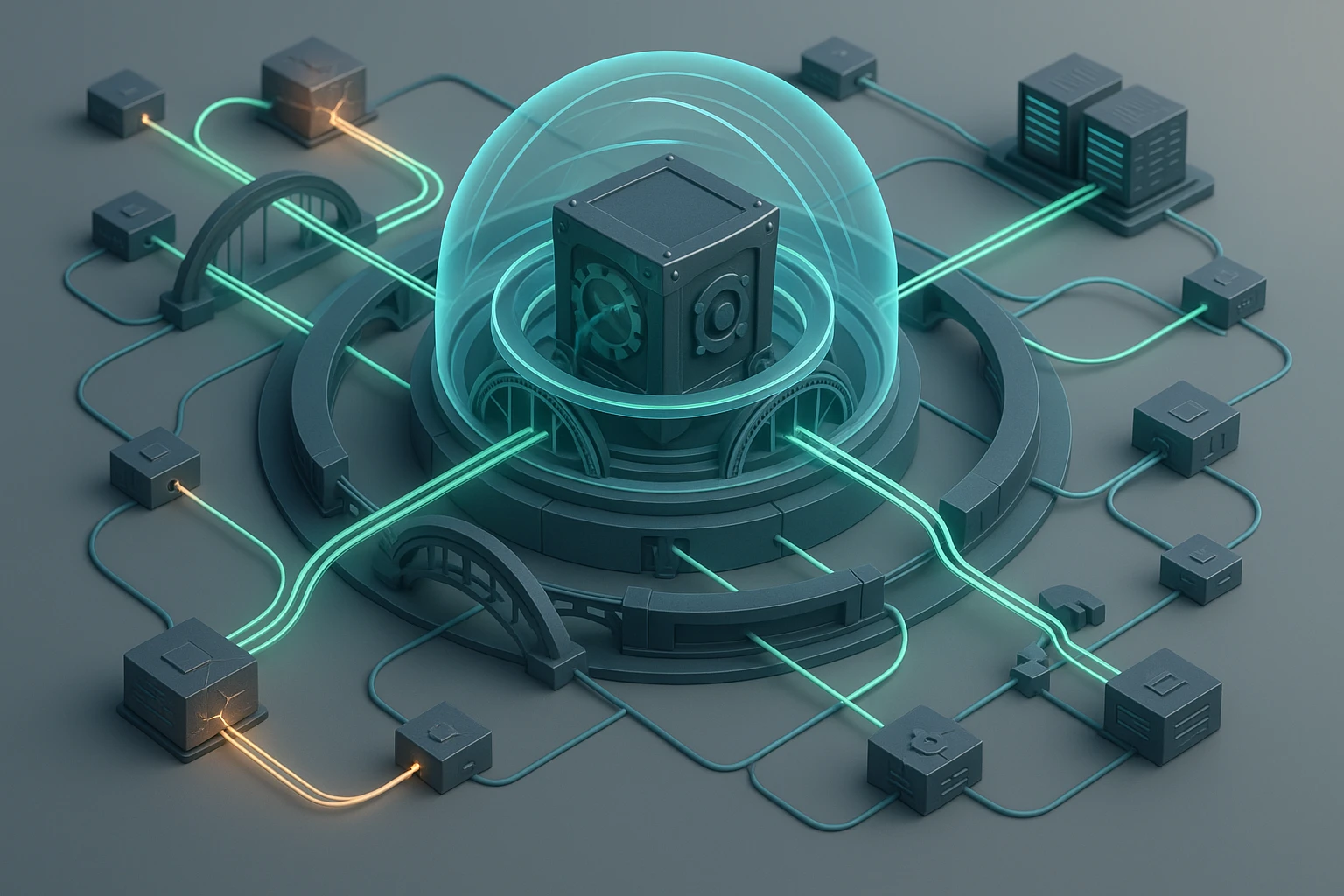
How to Design for Fault Tolerance and Resilience
In an interconnected world where digital systems underpin nearly every aspect of modern life—from financial transactions to healthcare delivery—the ability of these systems to withstand failures has become not just desirable, but absolutely critical. A single point of failure can cascade into massive disruptions, costing organizations millions in lost revenue, damaged reputation, and eroded customer trust. Understanding how to build systems that gracefully handle failures isn't merely a technical consideration; it's a fundamental business imperative that separates thriving organizations from those that crumble under pressure.
Fault tolerance refers to a system's ability to continue operating properly even when one or more of its components fail, while resilience describes the broader capacity to absorb disturbances, adapt to change, and recover quickly from disruptions. Together, these concepts form the foundation of robust system architecture that anticipates failure as an inevitable reality rather than an exceptional circumstance. This comprehensive exploration examines multiple perspectives—from infrastructure design to organizational culture—providing practical frameworks that engineers, architects, and decision-makers can apply across diverse contexts.
Throughout this guide, you'll discover proven strategies for identifying potential failure points, implementing redundancy without excessive complexity, designing self-healing mechanisms, and establishing monitoring systems that provide early warning signals. You'll learn how leading organizations balance cost considerations with reliability requirements, explore real-world patterns that have emerged from decades of distributed systems experience, and gain actionable insights for building systems that not only survive failures but emerge stronger from them.
Understanding the Fundamental Principles
Building systems that can withstand failures requires a fundamental shift in perspective. Rather than viewing failure as an anomaly to be prevented at all costs, effective design acknowledges that failures are inevitable and plans accordingly. This mindset transformation represents the cornerstone of resilient architecture, influencing every decision from initial concept through ongoing operations.
The principle of graceful degradation ensures that when components fail, the system continues to provide reduced functionality rather than complete collapse. Consider an e-commerce platform where the recommendation engine fails—the site should continue to allow browsing and purchasing even if personalized suggestions become unavailable. This approach prioritizes core functionality over peripheral features, ensuring that critical business operations remain intact even during partial system failures.
"The best systems are those that fail in ways that minimize impact and maximize recovery speed, not those that claim they'll never fail."
Another foundational principle involves isolation of failure domains. By compartmentalizing systems into independent units, failures can be contained within specific boundaries rather than propagating throughout the entire infrastructure. This bulkhead pattern, borrowed from maritime engineering where ships are divided into watertight compartments, prevents a single breach from sinking the entire vessel. In software systems, this translates to microservices architectures, separate database instances, and isolated network segments that limit the blast radius of any individual failure.
The concept of redundancy at multiple levels provides backup capacity when primary components fail. However, effective redundancy goes beyond simple duplication—it requires diversity in implementation, geographic distribution, and independence of failure modes. Having two identical servers in the same data center provides less resilience than having diverse systems in separate geographic regions, as the former remains vulnerable to localized events like power outages or natural disasters.
| Principle | Description | Implementation Example | Common Pitfalls |
|---|---|---|---|
| Graceful Degradation | System continues with reduced functionality when components fail | E-commerce site maintains checkout even when recommendations fail | Not prioritizing which features are truly essential |
| Failure Isolation | Contain failures to prevent cascading effects | Microservices with circuit breakers between services | Creating too many dependencies between isolated components |
| Redundancy | Multiple instances of critical components | Active-active database replication across regions | Redundant systems sharing common failure modes |
| Self-Healing | Automatic detection and recovery from failures | Container orchestration automatically replacing failed instances | Recovery mechanisms that trigger too aggressively |
| Observability | Comprehensive monitoring and diagnostic capabilities | Distributed tracing across service boundaries | Collecting metrics without actionable alerting |
Architectural Patterns for Resilient Systems
Translating principles into practice requires specific architectural patterns that have proven effective across countless implementations. These patterns provide reusable solutions to common resilience challenges, offering blueprints that teams can adapt to their specific contexts while avoiding the need to reinvent fundamental approaches.
Circuit Breaker Pattern
The circuit breaker pattern prevents a network or service failure from cascading through the system by monitoring for failures and temporarily blocking requests to failing components. Much like an electrical circuit breaker that trips to prevent damage from overload, this pattern detects when a service becomes unhealthy and stops sending requests that would inevitably fail, giving the troubled service time to recover while preventing resource exhaustion in calling services.
Implementation involves three states: closed (normal operation), open (blocking requests after threshold failures), and half-open (testing if the service has recovered). When the circuit is open, requests either fail immediately with a cached response or trigger fallback logic, dramatically reducing latency compared to waiting for timeouts. After a configured period, the circuit transitions to half-open, allowing a limited number of test requests through to determine if the downstream service has recovered.
Retry with Exponential Backoff
Transient failures—temporary issues that resolve themselves—represent a significant portion of system failures. The retry pattern acknowledges this reality by automatically reattempting failed operations, but naive implementations can exacerbate problems by overwhelming recovering services with request floods. Exponential backoff solves this by progressively increasing wait times between retry attempts, giving systems breathing room to recover while still providing eventual success for transient issues.
Adding jitter—random variation in retry timing—prevents the thundering herd problem where many clients retry simultaneously, creating synchronized waves of traffic that can repeatedly overwhelm recovering services. This seemingly small detail can mean the difference between smooth recovery and prolonged outages caused by well-intentioned retry logic.
"Resilience isn't about preventing every failure; it's about reducing the mean time to recovery and limiting the impact radius when failures inevitably occur."
Bulkhead Pattern
Named after the compartmentalized structure of ship hulls, the bulkhead pattern isolates resources for different parts of an application to prevent resource exhaustion in one area from affecting others. By allocating separate thread pools, connection pools, or compute resources to different functionalities, a resource leak or spike in one area cannot starve other parts of the system.
For instance, a web application might maintain separate thread pools for user-facing requests, background jobs, and administrative operations. If background job processing encounters issues and consumes excessive resources, user-facing requests continue to operate normally within their protected resource allocation. This pattern trades some efficiency for reliability, accepting that resources might not be perfectly utilized in exchange for guaranteed isolation.
Health Checks and Readiness Probes
Modern orchestration platforms rely on health checks to determine which instances should receive traffic. Implementing meaningful health checks requires distinguishing between liveness (is the instance running?) and readiness (is it prepared to handle requests?). A database connection pool that's temporarily exhausted might indicate an instance that's alive but not ready, requiring different handling than a crashed process.
Effective health checks verify actual functionality rather than mere process existence. Checking that a web server process is running provides less value than verifying it can successfully query its database and respond to requests. However, health checks themselves must be lightweight to avoid becoming a source of system load, particularly when checked frequently across many instances.
Infrastructure and Deployment Strategies
Architectural patterns provide the blueprint, but infrastructure choices and deployment practices determine whether resilience principles translate into reliable operations. The physical and logical organization of computing resources, networking, and deployment pipelines creates the foundation upon which all other resilience measures rest.
Geographic Distribution and Multi-Region Architecture
Distributing systems across multiple geographic regions provides resilience against localized failures ranging from data center power outages to natural disasters. However, multi-region architecture introduces complexity in data consistency, latency, and operational overhead. Organizations must carefully consider their recovery time objectives (RTO) and recovery point objectives (RPO) when deciding between active-passive and active-active configurations.
Active-passive configurations maintain a primary region handling all traffic with standby regions ready to take over during failures. This approach simplifies data consistency but results in longer recovery times and unused capacity in standby regions. Active-active configurations distribute traffic across multiple regions simultaneously, providing better resource utilization and faster failover but requiring sophisticated data replication and conflict resolution strategies.
- 🌍 Multi-region deployment protects against geographic failures and reduces latency for distributed users
- ⚡ Content delivery networks cache static assets closer to users while providing DDoS protection
- 🔄 Database replication strategies must balance consistency, availability, and partition tolerance
- 🎯 Traffic management systems route requests away from unhealthy regions automatically
- 📊 Data sovereignty requirements may constrain geographic distribution options in regulated industries
Immutable Infrastructure and Blue-Green Deployments
Traditional deployment approaches that modify running systems introduce risk through configuration drift and unpredictable state changes. Immutable infrastructure treats servers as disposable units that are never modified after deployment—updates involve replacing entire instances rather than patching existing ones. This approach eliminates configuration drift, makes rollbacks trivial, and ensures that every deployment is tested against a known baseline.
Blue-green deployments extend this concept by maintaining two identical production environments. At any time, one environment (blue) serves production traffic while the other (green) remains idle or handles testing. Deployments involve updating the green environment, validating it thoroughly, then switching traffic over. If issues arise, traffic switches back to blue instantly, providing near-zero-downtime deployments with fast, safe rollback capabilities.
"The most resilient systems are those designed with the assumption that every component will eventually fail, and failure is just another state to be handled gracefully."
Chaos Engineering and Proactive Failure Testing
Waiting for production failures to validate resilience mechanisms is both risky and inefficient. Chaos engineering deliberately introduces failures into systems to verify that resilience measures work as intended before real incidents occur. By systematically terminating instances, introducing network latency, exhausting resources, and simulating various failure modes, teams gain confidence that their systems will behave correctly during actual incidents.
Effective chaos engineering starts small—perhaps terminating a single non-critical instance—and gradually increases in scope as confidence grows. The practice requires strong observability to detect when experiments cause unexpected impacts, clear hypotheses about expected system behavior, and organizational commitment to learning from results rather than punishing teams when experiments reveal weaknesses.
| Strategy | Resilience Benefit | Complexity Cost | Best Suited For |
|---|---|---|---|
| Multi-Region Active-Active | Highest availability, geographic redundancy, reduced latency | High - data consistency, conflict resolution, operational overhead | Global services with strict uptime requirements |
| Multi-Region Active-Passive | Geographic redundancy, simpler data consistency | Medium - failover automation, unused capacity costs | Services with moderate uptime needs, simpler data models |
| Multi-AZ Single Region | Protection against data center failures, lower latency | Low - similar to single AZ with replication overhead | Regional services, cost-sensitive applications |
| Immutable Infrastructure | Consistent deployments, easy rollback, reduced drift | Medium - requires automation, changes operational practices | Any system with frequent deployments |
| Chaos Engineering | Validates resilience mechanisms, builds confidence | Medium - requires observability, organizational buy-in | Critical systems where failure costs are high |
Data Management and State Handling
While stateless components can achieve resilience through simple replication, managing stateful systems—particularly databases and persistent storage—presents unique challenges. Data represents the irreplaceable core of most systems; losing or corrupting it often causes more severe consequences than any service outage.
Replication Strategies and Consistency Trade-offs
The CAP theorem states that distributed systems can provide at most two of three guarantees: consistency, availability, and partition tolerance. Since network partitions are inevitable in distributed systems, the practical choice becomes between consistency and availability. Strongly consistent systems ensure all nodes see the same data but may become unavailable during network issues. Eventually consistent systems remain available during partitions but may temporarily return stale data.
Synchronous replication ensures data is written to multiple nodes before acknowledging success, providing strong consistency at the cost of increased latency and reduced availability during failures. Asynchronous replication acknowledges writes immediately and replicates in the background, offering better performance and availability but risking data loss if the primary node fails before replication completes. Many systems employ hybrid approaches, using synchronous replication within a region for strong consistency while using asynchronous replication across regions for disaster recovery.
Backup and Recovery Procedures
Replication protects against hardware failures and provides high availability, but it doesn't protect against logical errors—accidental deletions, corrupted data, or malicious actions replicate just as faithfully as valid data. Regular backups to separate storage systems provide point-in-time recovery capabilities essential for recovering from these scenarios.
Effective backup strategies follow the 3-2-1 rule: maintain three copies of data, on two different media types, with one copy off-site. Testing restoration procedures regularly ensures that backups actually work—discovering backup corruption during an emergency recovery attempt is far too late. Automated testing that periodically restores backups to staging environments and validates data integrity provides confidence that recovery procedures will work when needed.
"Data resilience requires defense in depth: replication for availability, backups for point-in-time recovery, and regular testing to ensure both actually work when needed."
Handling Distributed Transactions
Distributed transactions that span multiple services or databases introduce significant complexity and fragility. Traditional two-phase commit protocols provide strong consistency but create tight coupling and single points of failure. Modern approaches favor eventual consistency through patterns like saga orchestration, where long-running transactions are decomposed into local transactions with compensating actions for rollback.
The saga pattern coordinates distributed transactions through either choreography (services react to events) or orchestration (a central coordinator manages the workflow). When a step fails, compensating transactions undo previously completed steps, maintaining overall consistency without requiring distributed locks. This approach trades immediate consistency for resilience and scalability, accepting that the system may temporarily be in intermediate states.
Monitoring, Observability, and Incident Response
Building resilient systems is only half the equation—detecting when resilience mechanisms activate and understanding system behavior during degraded states requires comprehensive observability. Without visibility into system internals, even the most sophisticated resilience patterns become black boxes that fail in mysterious ways.
The Three Pillars of Observability
Metrics provide quantitative measurements of system behavior over time—request rates, error rates, latency percentiles, and resource utilization. Time-series metrics enable trend analysis and alerting when values exceed thresholds. However, metrics alone cannot explain why systems behave in particular ways; they indicate that something is wrong without revealing the root cause.
Logs capture discrete events with contextual information, providing detailed records of what happened at specific points in time. Structured logging with consistent formats enables efficient searching and analysis, but the sheer volume of logs in distributed systems can overwhelm storage and analysis capabilities. Effective logging strategies balance capturing sufficient detail for troubleshooting with managing data volumes through sampling and retention policies.
Traces follow individual requests as they flow through distributed systems, connecting related events across service boundaries. Distributed tracing reveals how components interact, where latency accumulates, and which dependencies contribute to failures. Traces provide the narrative thread connecting metrics and logs, transforming isolated data points into coherent stories about system behavior.
Alerting and On-Call Practices
Effective alerting distinguishes between symptoms requiring immediate human intervention and informational events that can wait. Alert fatigue—when teams receive so many alerts that they become desensitized—undermines incident response by training people to ignore notifications. Alerts should indicate problems affecting users or imminent system failure, not merely deviations from normal patterns that self-correct.
Implementing service level objectives (SLOs) provides objective criteria for alerting based on user experience rather than arbitrary thresholds. An SLO might specify that 99.9% of requests should complete within 200ms, with alerts triggering when the error budget is being consumed faster than sustainable. This approach focuses attention on what matters—user experience—rather than internal metrics that may not directly impact users.
"Observability isn't about collecting data; it's about having the right information available to understand system behavior during novel failure modes you didn't anticipate."
Incident Management and Learning from Failures
Despite best efforts, incidents will occur. Effective incident management focuses on rapid detection, clear communication, systematic troubleshooting, and learning from failures. Establishing clear roles—incident commander, communications lead, technical leads—prevents confusion during high-stress situations. Maintaining detailed incident timelines enables post-incident analysis to understand what happened and why.
Blameless post-mortems recognize that incidents result from systemic issues rather than individual mistakes. These reviews focus on understanding the conditions that enabled failures and identifying improvements to prevent recurrence. Publishing post-mortems widely shares knowledge across the organization, helping teams learn from each other's experiences and building institutional knowledge about failure modes and effective responses.
Cost Considerations and Trade-offs
Resilience doesn't come free—redundant systems, geographic distribution, and sophisticated monitoring all carry costs. Organizations must balance reliability requirements against budget constraints, making informed trade-offs based on the actual cost of failures versus the cost of prevention.
Calculating the true cost of downtime requires considering not just immediate revenue loss but also long-term impacts on customer trust, regulatory penalties, and competitive positioning. A brief outage for a consumer application might cost thousands in lost transactions, while the same outage for a healthcare system could endanger lives. Understanding these stakes helps justify appropriate investment in resilience measures.
Not all system components require equal levels of resilience. Tiering systems by criticality allows organizations to invest heavily in resilience for core functionality while accepting lower reliability for peripheral features. A payment processing service might warrant multi-region active-active deployment with extensive monitoring, while an internal reporting tool might suffice with simpler backup and recovery procedures.
Cloud platforms offer various pricing models that affect resilience costs. Reserved instances provide cost savings but reduce flexibility to scale down during low-demand periods. Spot instances offer dramatic discounts but can be terminated with little notice, suitable for stateless workers but not critical services. Architecting systems to leverage multiple instance types—reserved capacity for baseline load, on-demand for normal scaling, spot for burst capacity—optimizes costs while maintaining resilience.
Security Considerations in Resilient Design
Resilience and security are deeply interconnected—systems must withstand not only accidental failures but also deliberate attacks. Distributed denial of service (DDoS) attacks, ransomware, and sophisticated intrusions all threaten system availability and integrity. Building resilient systems requires considering security throughout the design process rather than treating it as an afterthought.
Defense in depth applies multiple layers of security controls so that if one layer fails, others provide continued protection. Network segmentation limits lateral movement by attackers, encryption protects data at rest and in transit, and authentication mechanisms verify identity before granting access. No single control provides perfect security, but layered defenses make successful attacks significantly more difficult.
Rate limiting and throttling protect systems from being overwhelmed by excessive requests, whether from legitimate traffic spikes or malicious attacks. Implementing these controls at multiple levels—network edge, API gateway, and application layer—provides graduated protection. Sophisticated rate limiting considers factors beyond simple request counts, such as resource consumption patterns and user behavior anomalies that might indicate abuse.
"True resilience requires defending against both accidental failures and deliberate attacks, recognizing that availability can be compromised through technical failures or security breaches."
Disaster recovery planning must account for scenarios where attackers gain access to production systems. Maintaining offline backups that cannot be accessed through compromised credentials provides a last line of defense against ransomware. Regular security assessments and penetration testing identify vulnerabilities before attackers exploit them, while incident response plans that include security scenarios prepare teams to respond effectively to breaches.
Organizational and Cultural Aspects
Technical solutions alone cannot create resilient systems—organizational culture and practices play equally important roles. Teams must have the authority to prioritize reliability work, the skills to implement resilience patterns effectively, and the psychological safety to learn from failures without fear of punishment.
Establishing site reliability engineering (SRE) practices embeds reliability as a core concern throughout the development lifecycle. SRE teams bridge development and operations, bringing software engineering approaches to operational problems. By defining service level objectives, maintaining error budgets, and automating toil, SRE practices make reliability measurable and create incentives to balance feature development with stability improvements.
Investing in training ensures that team members understand resilience patterns and can implement them effectively. This includes not just technical training on specific tools and patterns but also developing judgment about when to apply different approaches. Resilience engineering requires balancing competing concerns—consistency versus availability, simplicity versus redundancy, cost versus reliability—and developing this judgment comes through experience and mentorship.
Creating psychological safety enables teams to acknowledge and learn from failures rather than hiding them. When people fear blame for incidents, they become reluctant to report problems quickly or share details that might reflect poorly on their decisions. Organizations that treat incidents as learning opportunities rather than occasions for punishment build cultures where people proactively identify and address potential issues before they cause outages.
Emerging Trends and Future Directions
The field of resilience engineering continues to evolve as systems grow more complex and expectations for reliability increase. Several emerging trends are shaping how organizations approach fault tolerance and resilience in modern architectures.
Service mesh architectures extract common resilience patterns—circuit breakers, retries, timeouts, observability—into infrastructure layers that apply uniformly across services. Rather than implementing these patterns repeatedly in application code, service meshes provide them as platform capabilities, ensuring consistent behavior and reducing the burden on development teams. This approach enables centralized policy management and sophisticated traffic routing while maintaining language and framework independence.
Artificial intelligence and machine learning are increasingly applied to resilience challenges. Anomaly detection algorithms identify unusual patterns that might indicate emerging problems before they cause failures. Predictive models forecast capacity needs and potential bottlenecks, enabling proactive scaling. Automated remediation systems respond to certain classes of incidents without human intervention, reducing mean time to recovery for common issues.
Edge computing brings computation closer to users, reducing latency and providing resilience against network partitions between edge locations and central data centers. However, edge deployments introduce new challenges in consistency, deployment orchestration, and monitoring across potentially thousands of locations. Designing resilient edge architectures requires rethinking assumptions based on centralized data center deployments.
Serverless architectures abstract infrastructure management, automatically scaling capacity and charging only for actual usage. While this model provides certain resilience benefits—automatic scaling, built-in redundancy—it also introduces new failure modes around cold starts, timeout limits, and vendor-specific constraints. Designing resilient serverless systems requires understanding these platform characteristics and working within their constraints.
Practical Implementation Roadmap
Transforming resilience principles into operational reality requires systematic planning and incremental implementation. Organizations at different maturity levels should focus on foundational practices before pursuing advanced techniques, building capabilities progressively rather than attempting to implement everything simultaneously.
Foundation phase establishes basic monitoring, backup procedures, and deployment practices. Teams should implement comprehensive logging, set up basic metrics collection, establish regular backup schedules, and test restoration procedures. Documenting current architecture and identifying single points of failure provides a baseline for improvement. These foundational practices don't require sophisticated tooling but do require organizational discipline and commitment.
Intermediate phase introduces redundancy, automated failover, and resilience patterns. This includes deploying across multiple availability zones, implementing circuit breakers and retry logic, establishing health checks, and creating runbooks for common incident scenarios. Teams should begin practicing chaos engineering on non-critical systems, building confidence in resilience mechanisms through controlled experimentation.
Advanced phase pursues multi-region deployment, sophisticated observability, and proactive resilience testing. Organizations at this level implement distributed tracing, establish SLO-based alerting, conduct regular disaster recovery drills, and run chaos engineering experiments in production. Advanced practices require significant investment in tooling and expertise but provide the highest levels of resilience.
Throughout this journey, measuring progress through metrics like mean time between failures (MTBF), mean time to detection (MTTD), and mean time to recovery (MTTR) provides objective evidence of improvement. Tracking error budgets based on SLOs creates transparency about reliability trends and helps balance feature development with stability work.
What is the difference between fault tolerance and resilience?
Fault tolerance refers specifically to a system's ability to continue operating correctly even when components fail, typically through redundancy and automatic failover mechanisms. Resilience is a broader concept encompassing fault tolerance but also including the ability to absorb various types of disturbances, adapt to changing conditions, and recover quickly from disruptions. A fault-tolerant system might handle hardware failures gracefully, while a resilient system also adapts to traffic spikes, degrades gracefully under load, and recovers quickly from various types of failures including security incidents and data corruption.
How much redundancy is enough for a resilient system?
The appropriate level of redundancy depends on your specific reliability requirements, budget constraints, and the cost of failures. Start by defining service level objectives that specify acceptable downtime and data loss, then work backward to determine what redundancy is necessary to meet those objectives. Consider implementing redundancy at multiple levels—multiple instances within an availability zone, multiple availability zones within a region, and potentially multiple regions—with each level addressing different failure scenarios. Remember that redundancy alone isn't sufficient; components must be truly independent without shared failure modes.
Should we implement resilience patterns from the beginning or add them later?
This depends on your system's criticality and your team's experience. For systems where downtime has significant consequences, implementing foundational resilience patterns from the beginning—proper error handling, health checks, basic monitoring, and backup procedures—is essential. However, advanced patterns like multi-region deployment might be premature optimization for early-stage products still validating product-market fit. A pragmatic approach involves implementing basic resilience measures initially, then progressively adding more sophisticated patterns as the system matures and reliability requirements become clearer. Retrofitting resilience is more expensive than building it in initially, but over-engineering early can waste resources on capabilities you don't yet need.
How do we balance the cost of resilience measures with budget constraints?
Start by quantifying the actual cost of downtime for your specific business context, including direct revenue loss, customer churn, regulatory penalties, and reputational damage. This provides objective data for cost-benefit analysis of resilience investments. Not all system components require equal resilience—tier your systems by criticality and invest heavily in resilience for core functionality while accepting lower reliability for peripheral features. Consider that some resilience measures like proper error handling and health checks cost primarily engineering time rather than infrastructure, while others like multi-region deployment carry ongoing operational costs. Cloud reserved instances and committed use discounts can significantly reduce the cost of redundant infrastructure when planned appropriately.
What metrics should we track to measure system resilience?
Focus on metrics that reflect user experience and business impact rather than purely technical measures. Service level indicators based on availability, latency, and error rates provide the foundation, typically measured as percentages of requests meeting defined thresholds. Track mean time between failures to understand how often incidents occur, mean time to detection to measure how quickly you identify problems, and mean time to recovery to assess how efficiently you resolve incidents. Error budgets derived from service level objectives provide a single metric that balances reliability with feature development velocity. Additionally, track the effectiveness of specific resilience mechanisms—circuit breaker activation frequency, automatic scaling events, failover occurrences—to understand which patterns provide the most value.
How can small teams with limited resources implement resilience effectively?
Small teams should focus on high-impact, low-complexity resilience practices first. Implement comprehensive error handling and logging to understand failures when they occur. Use managed services from cloud providers that include built-in redundancy and automatic failover, leveraging their expertise rather than building everything yourself. Deploy across multiple availability zones within a single region to protect against data center failures without the complexity of multi-region architecture. Establish regular backup schedules and test restoration procedures—this requires discipline but minimal tooling. Implement basic circuit breakers and retry logic using libraries rather than building custom solutions. As the team grows and systems mature, progressively add more sophisticated resilience patterns based on actual operational experience identifying the highest-risk failure modes.