What Is GitOps?
Understanding GitOps: A Modern Approach to Infrastructure and Application Management
In today's rapidly evolving technological landscape, organizations face mounting pressure to deliver software faster while maintaining stability and security. Traditional approaches to managing infrastructure and deployments often create bottlenecks, introduce human error, and make it difficult to track changes over time. This challenge has become particularly acute as companies adopt cloud-native technologies and microservices architectures, where the complexity of managing multiple environments and services can quickly become overwhelming.
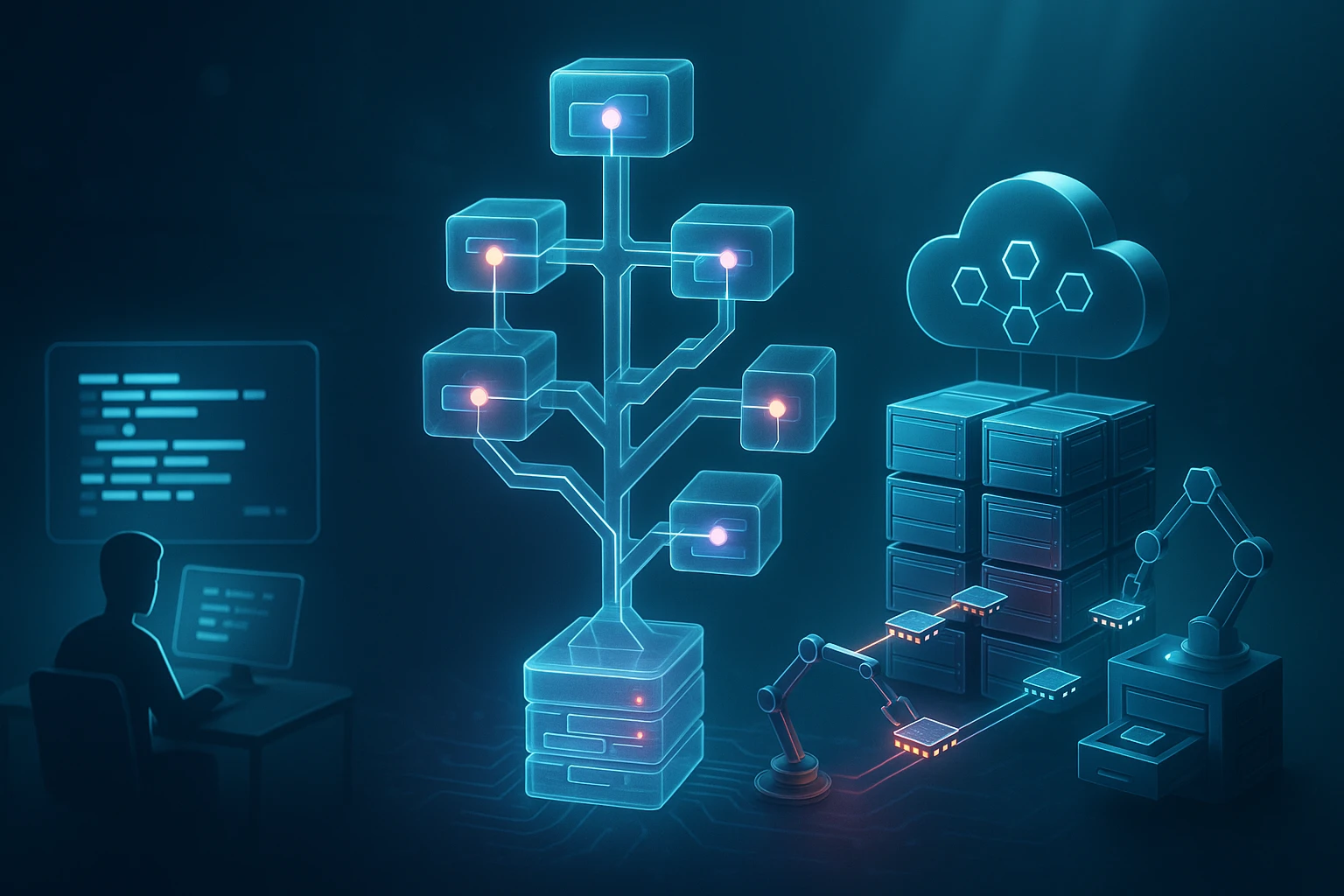
GitOps represents a paradigm shift in how we think about infrastructure and application delivery. At its core, it's an operational framework that takes DevOps best practices used for application development—such as version control, collaboration, compliance, and CI/CD—and applies them to infrastructure automation. The methodology uses Git as the single source of truth for declarative infrastructure and applications, enabling teams to manage their entire system through pull requests and automated workflows.
Throughout this exploration, you'll discover how GitOps transforms operational workflows, the specific benefits it brings to development and operations teams, and practical considerations for implementation. We'll examine the fundamental principles that make GitOps effective, compare different tooling options, explore real-world use cases, and address common challenges teams encounter when adopting this approach. Whether you're a developer seeking better deployment practices or an operations professional looking to modernize your infrastructure management, this comprehensive guide will provide the insights you need to understand and evaluate GitOps for your organization.
The Core Principles Behind GitOps
GitOps operates on four fundamental principles that distinguish it from traditional deployment and infrastructure management approaches. Understanding these principles is essential for anyone considering implementing GitOps within their organization.
Declarative configuration forms the foundation of GitOps. Rather than writing imperative scripts that specify step-by-step instructions for achieving a desired state, GitOps relies on declarative definitions that describe what the system should look like. This approach separates the desired state from the actual implementation details, making systems more predictable and easier to manage. Kubernetes manifests, Terraform configurations, and similar declarative formats serve as the building blocks for GitOps implementations.
The second principle centers on versioned and immutable storage. Every change to your infrastructure or application configuration must be stored in Git, creating an auditable history of modifications. This versioning provides several critical advantages: the ability to roll back to any previous state, clear attribution of who made what changes and when, and the capacity to review changes before they're applied. Git's distributed nature also ensures that multiple copies of your configuration exist, providing built-in disaster recovery capabilities.
"The power of GitOps lies not in the tools themselves, but in the cultural shift toward treating infrastructure as code with the same rigor we apply to application development."
Automated synchronization represents the third pillar of GitOps. Software agents continuously monitor the Git repository and automatically apply any changes to the target environment. This automation eliminates manual deployment steps, reduces human error, and ensures that the actual state of your systems always matches the desired state defined in Git. When drift occurs—when the actual state diverges from the declared state—these agents automatically reconcile the difference, maintaining consistency across your infrastructure.
The fourth principle involves continuous reconciliation. GitOps systems don't just apply changes once; they continuously observe the actual state and compare it against the desired state in Git. If someone makes manual changes directly to the infrastructure, the GitOps operator detects this drift and either alerts the team or automatically reverts the change, depending on configuration. This continuous feedback loop ensures that your Git repository remains the authoritative source of truth.
How GitOps Differs from Traditional DevOps
While GitOps builds upon DevOps principles, it introduces specific constraints and practices that set it apart. Traditional DevOps often involves a mix of manual processes, various tools, and different sources of truth for different components. A team might use one system for application deployments, another for infrastructure provisioning, and yet another for configuration management. This fragmentation creates complexity and increases the likelihood of inconsistencies.
GitOps consolidates these practices around Git as the central control plane. Instead of pushing changes to production through various deployment tools and scripts, teams make changes by submitting pull requests to a Git repository. The GitOps operator then pulls these changes and applies them automatically. This pull-based model contrasts with traditional push-based CI/CD pipelines, where the CI system has direct access to production environments.
| Aspect | Traditional DevOps | GitOps |
|---|---|---|
| Deployment Method | Push-based (CI/CD pushes to production) | Pull-based (operators pull from Git) |
| Source of Truth | Multiple systems and tools | Git repository exclusively |
| Change Process | Varies by tool and team | Standardized through pull requests |
| Rollback Mechanism | Tool-specific procedures | Git revert or checkout |
| Audit Trail | Scattered across multiple systems | Complete history in Git |
| Access Control | Managed per tool | Centralized through Git permissions |
Essential Components of a GitOps Workflow
Implementing GitOps requires several key components working together in harmony. Understanding these elements helps teams design effective GitOps architectures tailored to their specific needs.
The Git Repository Structure
The Git repository serves as the backbone of any GitOps implementation. Organizations typically structure their repositories in one of several ways, each with distinct advantages. A monorepo approach keeps all configuration in a single repository, simplifying management and ensuring consistent versioning across all components. Alternatively, separate repositories for different applications or environments provide better access control and allow teams to work independently without interfering with each other.
Within these repositories, teams organize their declarative configurations logically. Common patterns include separating application manifests from infrastructure definitions, organizing files by environment (development, staging, production), and maintaining clear directory structures that reflect the architecture of the systems being managed. Well-structured repositories make it easier for team members to locate and modify configurations while reducing the risk of unintended changes.
GitOps Operators and Controllers
GitOps operators are software agents that run within your infrastructure and continuously synchronize the actual state with the desired state defined in Git. These operators watch for changes in the Git repository and automatically apply updates to the target environment. They also monitor the actual state of the infrastructure and detect any drift from the declared configuration.
Several popular GitOps operators exist, each with different features and design philosophies. Flux CD provides a lightweight, Kubernetes-native approach with strong support for Helm charts and Kustomize. It uses a set of controllers that each handle specific aspects of the GitOps workflow, from source management to deployment orchestration. Argo CD offers a more comprehensive platform with a rich web interface for visualizing applications and their sync status. It excels in multi-cluster scenarios and provides sophisticated rollback and health assessment capabilities.
"Moving to GitOps fundamentally changed how we think about deployments—from events that require careful planning and execution to routine operations that happen automatically and reliably."
These operators typically support multiple source types beyond plain Kubernetes manifests, including Helm charts, Kustomize overlays, and various templating systems. They can manage dependencies between applications, perform health checks before marking a deployment as successful, and send notifications when synchronization fails or drift is detected.
CI/CD Pipeline Integration
GitOps doesn't eliminate CI/CD pipelines; rather, it redefines their role. In a GitOps workflow, the CI pipeline focuses on building, testing, and publishing artifacts—such as container images—but it doesn't directly deploy to production. Instead, after successfully building an artifact, the CI pipeline updates the Git repository with new image tags or configuration changes. This update triggers the GitOps operator to deploy the new version.
This separation of concerns provides several benefits. CI systems no longer need credentials to access production environments, reducing security risks. The deployment process becomes more transparent since all changes flow through Git's review mechanisms. Teams can also implement sophisticated approval workflows using Git's native features like protected branches and required reviewers.
Implementing GitOps in Kubernetes Environments
Kubernetes has become the de facto platform for GitOps implementations, thanks to its declarative nature and robust API. The synergy between Kubernetes' design principles and GitOps methodology creates a powerful combination for managing containerized applications.
Setting Up Your First GitOps Pipeline
Beginning a GitOps journey in Kubernetes involves several foundational steps. First, teams must decide on their repository structure and create the necessary Git repositories. This includes determining whether to use separate repositories for infrastructure and applications, how to organize multi-environment configurations, and establishing branching strategies that align with deployment workflows.
Next comes the installation and configuration of a GitOps operator. For teams new to GitOps, starting with a single cluster and simple applications helps build familiarity before tackling more complex scenarios. The operator needs appropriate permissions to manage resources in the cluster, typically granted through Kubernetes RBAC policies. Configuration includes specifying which Git repositories to monitor, how often to check for changes, and what namespaces the operator should manage.
🔧 Create a dedicated namespace for your GitOps operator to isolate its components from application workloads
🔐 Implement Git repository authentication using SSH keys or tokens stored as Kubernetes secrets
📋 Define your application manifests using standard Kubernetes YAML, Helm charts, or Kustomize
🔄 Configure synchronization policies to determine whether changes apply automatically or require manual approval
📊 Set up monitoring and alerting to track synchronization status and detect failures
Managing Secrets in GitOps
One of the most challenging aspects of GitOps involves handling sensitive information like passwords, API keys, and certificates. Since Git repositories serve as the source of truth, and these repositories may be shared among team members or even made public, storing secrets in plain text is not an option.
Several approaches address this challenge. Sealed Secrets, developed by Bitnami, encrypts secrets using asymmetric cryptography, allowing teams to store encrypted secrets in Git safely. Only the controller running in the cluster possesses the private key needed to decrypt these secrets. SOPS (Secrets OPerationS) provides another solution, encrypting specific values within YAML files while leaving structure and non-sensitive data readable. This approach works with various key management systems, including cloud provider KMS services, PGP, and age.
External secret management systems offer an alternative approach. Tools like HashiCorp Vault, AWS Secrets Manager, or Azure Key Vault store secrets outside of Git entirely. The GitOps repository contains only references to these secrets, and specialized Kubernetes operators fetch the actual values at runtime. This method provides additional security layers and centralized secret management but introduces external dependencies into the deployment process.
"The biggest mistake teams make with GitOps is trying to implement everything at once—start small, prove the value, then expand systematically."
Multi-Cluster and Multi-Environment Management
As organizations scale their Kubernetes adoption, they typically operate multiple clusters across different environments and regions. GitOps excels in these scenarios by providing consistent management across all clusters from a centralized Git repository.
Teams commonly implement multi-cluster GitOps using one of two patterns. In the cluster per environment approach, separate clusters exist for development, staging, and production. Each cluster runs its own GitOps operator, configured to watch specific directories or branches in the Git repository. This isolation ensures that changes to development configurations don't accidentally affect production systems.
The hub-and-spoke model uses a management cluster that controls multiple workload clusters. The management cluster runs the GitOps operator, which then deploys applications and configurations to the various workload clusters. This centralized approach simplifies operations and provides a single point of control, though it requires careful design to avoid creating a single point of failure.
GitOps Beyond Kubernetes
While Kubernetes dominates GitOps discussions, the principles and practices apply equally well to other infrastructure domains. Organizations managing traditional virtual machines, cloud resources, or serverless applications can all benefit from GitOps methodologies.
Infrastructure as Code with GitOps
Terraform, Pulumi, and similar infrastructure-as-code tools integrate naturally with GitOps workflows. Teams define their cloud infrastructure declaratively in Git repositories, and automated systems apply these configurations to cloud providers. This approach brings the same benefits seen in Kubernetes environments: version control, automated deployment, drift detection, and easy rollbacks.
Implementing GitOps for infrastructure requires careful consideration of state management. Terraform, for example, maintains state files that track the current infrastructure configuration. These state files must be stored securely and accessed consistently by automation systems. Remote state backends like Terraform Cloud, AWS S3, or Azure Storage provide shared state management with locking mechanisms to prevent concurrent modifications.
The CI/CD pipeline for infrastructure GitOps typically includes additional steps beyond application deployments. Plans must be generated and reviewed before applying changes, as infrastructure modifications can have significant cost and availability implications. Many teams implement approval gates that require human review of Terraform plans before allowing automated application.
Database Schema Management
Database schemas represent another area where GitOps principles prove valuable. Tools like Liquibase, Flyway, and Alembic allow teams to define database migrations as code, stored in Git alongside application code. GitOps operators can then apply these migrations automatically as part of application deployments, ensuring that database schemas stay synchronized with application versions.
This approach requires careful orchestration. Database migrations must complete successfully before deploying new application versions that depend on schema changes. Rollback procedures need special attention, as database changes often cannot be reversed as easily as application deployments. Many teams implement separate GitOps workflows for database migrations, with additional safety checks and approval requirements.
Security Considerations in GitOps
GitOps introduces unique security considerations that teams must address to maintain robust security postures. The centralization of configuration in Git repositories creates both opportunities and risks that require careful management.
Access Control and Permissions
Git's permission model becomes the primary access control mechanism in GitOps environments. Teams must carefully design repository access to ensure that only authorized individuals can modify production configurations. Branch protection rules, required reviews, and status checks provide layers of security that prevent unauthorized or untested changes from reaching production systems.
"Security in GitOps isn't just about protecting the Git repository—it's about ensuring the entire pipeline from commit to deployment maintains integrity and accountability."
The principle of least privilege applies both to human users and automated systems. GitOps operators should have only the permissions necessary to manage their designated resources, not cluster-admin access. Similarly, CI systems that update Git repositories should use dedicated service accounts with limited permissions rather than personal credentials.
Supply Chain Security
GitOps workflows involve multiple components that must be secured: Git repositories, container registries, CI/CD systems, and the GitOps operators themselves. Each component represents a potential attack vector that malicious actors could exploit to inject unauthorized changes into production systems.
Signing commits and tags provides cryptographic proof of authorship and integrity. Git supports GPG signing, allowing teams to verify that commits actually came from authorized developers. Container image signing using tools like Sigstore's Cosign extends this verification to the artifacts deployed by GitOps systems. Admission controllers can enforce policies requiring signed images, preventing the deployment of unverified containers.
Dependency scanning and vulnerability assessment should be integrated into the GitOps workflow. Automated tools can scan both the configurations stored in Git and the container images they reference, identifying security issues before deployment. When vulnerabilities are discovered, the declarative nature of GitOps makes remediation straightforward—update the configuration in Git, and the GitOps operator automatically applies the fix.
Monitoring and Observability in GitOps
Effective GitOps implementations require comprehensive monitoring to ensure that systems remain healthy and that the actual state matches the desired state. Observability becomes even more critical in GitOps environments where changes are applied automatically.
Tracking Synchronization Status
GitOps operators provide various mechanisms for monitoring synchronization status. Most offer web interfaces that display the current state of all managed applications, showing which are synchronized, which have pending changes, and which have encountered errors. These interfaces typically include detailed information about the resources managed by each application and their health status.
Prometheus metrics exported by GitOps operators enable integration with existing monitoring infrastructure. Teams can create dashboards showing synchronization frequency, error rates, and drift detection events. Alerting rules can notify operators when synchronization fails repeatedly or when significant drift is detected, enabling rapid response to issues.
Audit logs provide another crucial observability component. Every change applied by the GitOps operator should be logged, creating a detailed record of all modifications to the system. These logs complement Git's history, providing the runtime perspective on when changes were actually applied and what effects they had.
Application Health and Performance
Beyond synchronization status, teams need visibility into the health and performance of the applications managed through GitOps. GitOps operators typically integrate with Kubernetes health checks, using readiness and liveness probes to determine whether deployed applications are functioning correctly. More sophisticated health assessments might involve custom checks or integration with application performance monitoring tools.
Deployment metrics help teams understand the impact of changes. Tracking deployment frequency, lead time for changes, time to restore service, and change failure rate provides quantitative measures of GitOps effectiveness. These metrics align with the DORA (DevOps Research and Assessment) metrics widely used to evaluate DevOps practices.
| Monitoring Aspect | Key Metrics | Tools and Approaches |
|---|---|---|
| Synchronization Health | Sync success rate, time since last sync, drift detection frequency | GitOps operator dashboards, Prometheus metrics, custom alerts |
| Application Health | Pod status, readiness checks, resource utilization | Kubernetes metrics, health checks, APM tools |
| Deployment Velocity | Deployment frequency, lead time, rollback rate | Git analytics, CI/CD metrics, custom dashboards |
| Security Posture | Vulnerability scan results, policy violations, unauthorized changes | Security scanning tools, admission controller logs, audit trails |
| Resource Efficiency | Cluster utilization, cost per deployment, resource waste | Cloud provider metrics, cost management tools, resource analyzers |
Common Challenges and Solutions
Adopting GitOps introduces challenges that teams must navigate successfully. Understanding these common obstacles and their solutions helps organizations avoid pitfalls and accelerate their GitOps journey.
Managing Configuration Complexity
As the number of applications and environments grows, configuration management can become overwhelming. Teams may find themselves maintaining hundreds or thousands of YAML files, leading to duplication and inconsistency. Templating tools like Helm and Kustomize help address this complexity by enabling configuration reuse and environment-specific customization.
Helm provides a package management approach where charts define reusable application templates with configurable values. Teams can maintain a single chart for an application and deploy it across multiple environments with different value files. Kustomize takes a different approach, using base configurations and overlays to customize resources without templating. Both tools integrate well with GitOps operators and help manage configuration at scale.
Organizational strategies also help manage complexity. Establishing naming conventions, directory structures, and documentation standards ensures that team members can navigate repositories effectively. Regular refactoring to eliminate duplication and improve organization prevents technical debt from accumulating in configuration repositories.
Handling Stateful Applications
Stateful applications like databases pose unique challenges in GitOps environments. While the application configuration can be managed declaratively, the data itself requires special handling. Backup and recovery procedures must be carefully designed and tested, as automated deployments could potentially trigger data loss if not properly configured.
"The transition to GitOps revealed gaps in our processes we didn't know existed—forcing us to formalize and improve practices that had been handled inconsistently."
Many teams adopt a hybrid approach for stateful applications, using GitOps to manage the application infrastructure while handling data operations through separate, more carefully controlled processes. StatefulSets in Kubernetes provide some guarantees around pod identity and storage, but teams must still implement proper backup strategies and test recovery procedures regularly.
Coordinating Changes Across Multiple Systems
Modern applications often span multiple systems and services. A single feature might require changes to application code, database schemas, infrastructure configuration, and third-party service settings. Coordinating these changes through GitOps requires careful planning and often involves multiple repositories and deployment sequences.
Dependency management between applications becomes crucial. GitOps operators typically support defining dependencies, ensuring that prerequisite applications are healthy before deploying dependent services. However, teams must explicitly model these relationships in their configurations, which requires understanding the full dependency graph of their systems.
Best Practices for GitOps Success
Successful GitOps implementations share common characteristics that distinguish them from struggling adoptions. These best practices emerge from the collective experience of organizations that have successfully embraced GitOps at scale.
Start Small and Iterate
Rather than attempting to convert an entire organization to GitOps overnight, successful teams begin with pilot projects. Choose a non-critical application or environment to serve as a learning ground. This approach allows teams to develop expertise, refine processes, and demonstrate value before expanding to more critical systems. Early wins help build organizational support and provide concrete examples of GitOps benefits.
Invest in Documentation and Training
GitOps represents a significant shift in how teams work, requiring new skills and mental models. Comprehensive documentation covering repository structures, deployment processes, troubleshooting procedures, and emergency protocols ensures that all team members can work effectively. Regular training sessions help onboard new team members and keep existing staff updated on evolving practices.
Documentation should be treated as code, stored in Git alongside configurations and updated as processes evolve. Runbooks for common scenarios, architecture diagrams showing GitOps workflows, and decision records explaining why specific approaches were chosen all contribute to organizational knowledge.
Implement Progressive Delivery
Progressive delivery techniques like canary deployments and blue-green deployments integrate naturally with GitOps. Rather than updating all instances of an application simultaneously, progressive delivery gradually rolls out changes while monitoring for issues. If problems are detected, the rollout can be paused or reversed automatically.
Tools like Flagger extend GitOps operators with progressive delivery capabilities. Flagger can automatically promote canary deployments based on metrics like error rates and latency, or integrate with load testing tools to validate new versions before full rollout. This automation reduces the risk of deployments while maintaining the speed advantages of GitOps.
Establish Clear Ownership and Responsibilities
GitOps works best when ownership is clearly defined. Teams should know who is responsible for maintaining specific configurations, reviewing changes, and responding to issues. The Git repository structure can reflect organizational boundaries, with different teams having ownership of different directories or repositories.
Code ownership features in Git platforms like GitHub and GitLab allow teams to automatically assign reviewers based on which files are modified. This automation ensures that changes receive appropriate review without requiring manual assignment for every pull request.
The Future of GitOps
GitOps continues to evolve as organizations push the boundaries of what's possible with declarative configuration and automated deployment. Several trends are shaping the future direction of GitOps practices and tooling.
Standardization Efforts
The GitOps Working Group, part of the Cloud Native Computing Foundation, is working to standardize GitOps principles and practices. These standardization efforts aim to create interoperability between different GitOps tools and establish common terminology and patterns. As standards mature, organizations will benefit from reduced vendor lock-in and easier migration between tools.
AI and Machine Learning Integration
Artificial intelligence and machine learning are beginning to enhance GitOps workflows. Intelligent systems can analyze deployment patterns to predict optimal deployment times, detect anomalies in application behavior after deployments, and even suggest configuration optimizations. As these technologies mature, they promise to make GitOps systems more autonomous and self-healing.
Edge Computing and IoT
GitOps principles are being adapted for edge computing scenarios where applications run on distributed devices with intermittent connectivity. Managing configurations for thousands of edge devices presents unique challenges that require modifications to traditional GitOps approaches. New tools and patterns are emerging to address these use cases, extending GitOps benefits to the edge.
Making the GitOps Decision
Determining whether GitOps is right for your organization requires honest assessment of your current state, goals, and constraints. GitOps offers significant benefits but also requires investment in tooling, training, and process changes.
Organizations with mature DevOps practices and existing infrastructure-as-code implementations often find GitOps a natural evolution of their current approaches. The transition builds on existing skills and tools while adding structure and automation. Conversely, organizations still developing their DevOps capabilities might benefit from addressing foundational practices before adopting GitOps.
Team size and structure influence GitOps suitability. Smaller teams managing a few applications might find GitOps overhead excessive, while larger organizations with multiple teams and complex deployments often see immediate benefits from the coordination and consistency GitOps provides. The key is matching the approach to organizational scale and complexity.
Technical prerequisites also matter. GitOps works best with declarative infrastructure and applications. Organizations heavily invested in imperative scripts and manual processes face more significant migration challenges. However, these challenges often reveal opportunities for modernization that yield benefits beyond GitOps adoption.
Ultimately, GitOps represents more than a set of tools or practices—it embodies a philosophy of managing infrastructure and applications with the same rigor and best practices that modern software development has embraced. For organizations ready to make that commitment, GitOps offers a path to more reliable, secure, and efficient operations. The journey requires careful planning, sustained effort, and organizational support, but the destination—a fully automated, version-controlled, and auditable deployment pipeline—proves worth the investment for teams seeking to operate at scale with confidence.
FAQ
What is the main difference between GitOps and traditional CI/CD?
GitOps uses a pull-based deployment model where operators running in your infrastructure pull changes from Git, while traditional CI/CD typically pushes changes from the CI system to production. GitOps also makes Git the single source of truth for all configuration, whereas traditional approaches may use multiple systems and tools for different aspects of deployment and configuration management.
Can GitOps work without Kubernetes?
Yes, GitOps principles can be applied to any infrastructure that can be managed declaratively. While Kubernetes is the most common platform for GitOps due to its declarative nature, teams successfully use GitOps with Terraform for cloud infrastructure, Ansible for configuration management, and various other tools. The key requirements are declarative configuration and automated reconciliation.
How do you handle emergency hotfixes in a GitOps workflow?
Emergency hotfixes should still go through Git, but GitOps workflows can be designed to support expedited processes. This might include dedicated hotfix branches with reduced review requirements, automated fast-track approvals for specific types of changes, or manual sync triggers that apply changes immediately rather than waiting for the next sync interval. The key is maintaining Git as the source of truth even during emergencies.
What happens if the GitOps operator fails or the connection to Git is lost?
If the GitOps operator fails, your applications continue running in their current state—GitOps operators manage deployment and configuration, not runtime execution. If the connection to Git is lost, the operator cannot pull new changes, but existing applications remain unaffected. Most GitOps operators are designed for high availability and can be run in redundant configurations to minimize downtime. Once connectivity is restored, the operator resumes normal operation.
How do you manage secrets in GitOps if everything is in Git?
Secrets should never be stored in plain text in Git repositories. Instead, use encrypted secrets (tools like Sealed Secrets or SOPS), external secret management systems (HashiCorp Vault, cloud provider secret managers), or secret references that point to secrets stored elsewhere. The GitOps repository contains either encrypted secrets that only the cluster can decrypt, or references to secrets stored in secure external systems.
Is GitOps suitable for small teams or only large organizations?
GitOps can benefit teams of any size, but the return on investment varies. Small teams with simple applications might find the overhead of setting up GitOps tooling and processes excessive compared to simpler deployment methods. However, even small teams can benefit from GitOps principles like version control for configuration and declarative infrastructure. The key is implementing GitOps at a scale appropriate to your needs—start with basic practices and expand as complexity grows.