
How to Implement Event-Driven Architecture
Event-Driven Architecture Implementation Guide
Modern software systems face unprecedented challenges in handling real-time data, maintaining scalability, and delivering responsive user experiences. Traditional request-response architectures struggle under the weight of these demands, creating bottlenecks that frustrate users and developers alike. Event-driven architecture emerges as a transformative solution that fundamentally changes how applications communicate, process information, and respond to changes in their environment.
Event-driven architecture represents a design paradigm where system components communicate through the production, detection, and consumption of events rather than direct calls. This approach enables loosely coupled, highly scalable systems that react to changes as they happen. Throughout this exploration, we'll examine multiple perspectives—from technical implementation details to organizational considerations—ensuring you understand both the "how" and the "why" behind this architectural pattern.
By engaging with this comprehensive guide, you'll gain practical knowledge about implementing event-driven systems from the ground up. You'll discover the core components that make these architectures work, learn about various messaging patterns and technologies, understand common pitfalls and their solutions, and acquire actionable strategies for transitioning existing systems. Whether you're building microservices, IoT platforms, or real-time analytics systems, this knowledge will empower you to make informed architectural decisions.
Understanding the Foundational Concepts
Event-driven architecture fundamentally shifts the communication paradigm in distributed systems. Rather than components directly requesting information from each other, they broadcast events—significant changes in state—that other components can listen to and react upon. This decoupling creates systems where producers don't need to know about consumers, and vice versa, enabling unprecedented flexibility and scalability.
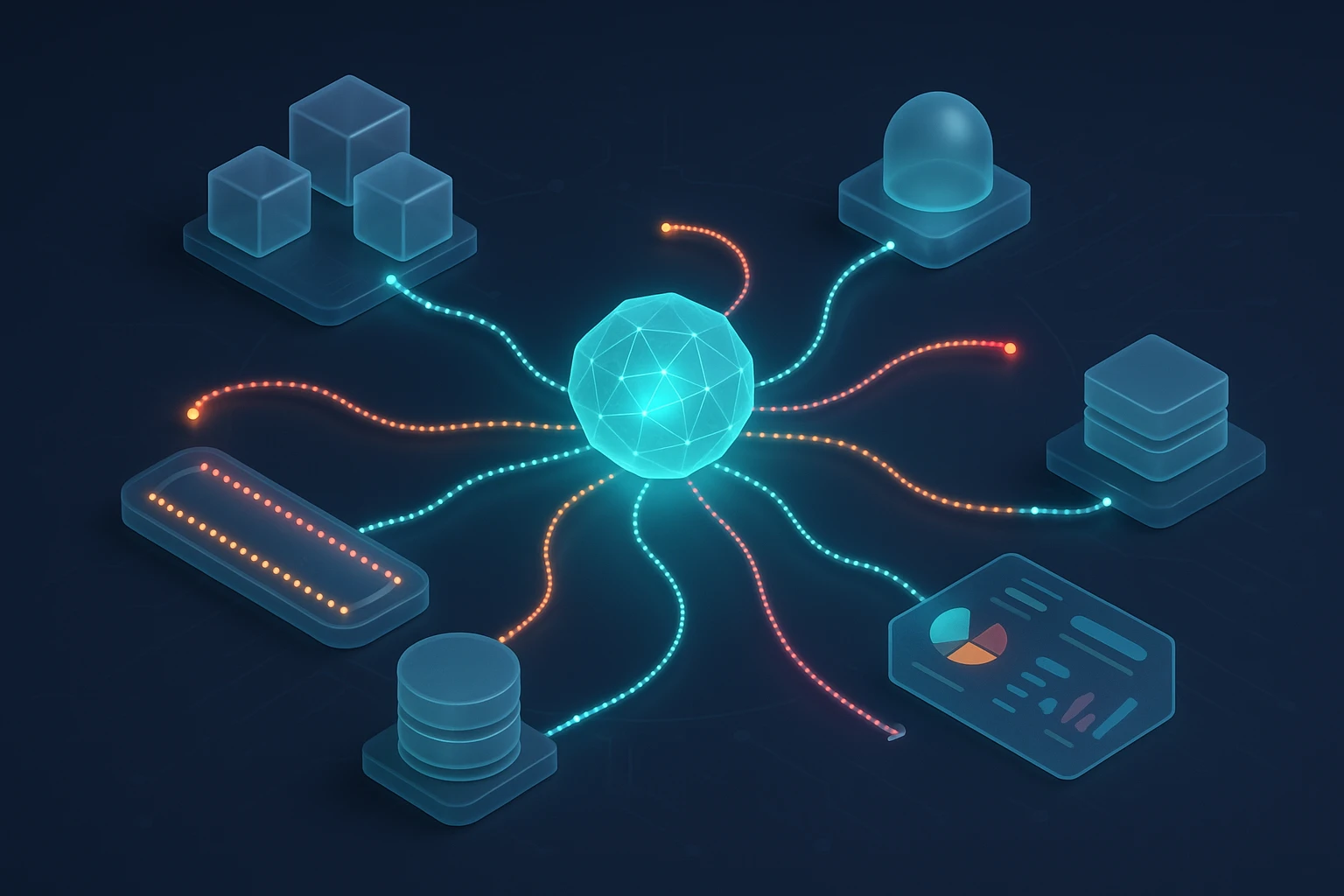
The architecture revolves around three primary actors: event producers, event routers, and event consumers. Producers generate events when something noteworthy occurs within their domain—a user registration, an order placement, a sensor reading. Event routers, often called event brokers or message buses, receive these events and distribute them to interested parties. Consumers subscribe to event types they care about and process them according to their specific business logic.
"The beauty of event-driven systems lies not in their complexity, but in their simplicity of interaction. Each component does one thing well and communicates through a universal language of events."
Events themselves carry information about what happened, when it happened, and relevant contextual data. They can be categorized into several types: domain events that represent business-significant occurrences, integration events used for cross-service communication, and notification events that simply alert systems to changes without carrying extensive data. Understanding these distinctions helps in designing appropriate event schemas and processing strategies.
The temporal nature of events introduces important considerations. Events represent facts about the past—immutable records of what occurred. This immutability provides powerful capabilities for event sourcing, audit trails, and temporal queries. However, it also requires careful thinking about event versioning, schema evolution, and backward compatibility as your system grows and changes over time.
The Event Lifecycle
Every event follows a predictable journey through your system. Initially, a producer detects a state change or action worthy of notification. The producer constructs an event object containing relevant data, metadata like timestamps and correlation identifiers, and publishes it to an event router. This publication step must be reliable—events should never be silently lost during this critical handoff.
Once in the event router, the event enters a distribution phase. Depending on your chosen messaging pattern, the router either delivers the event to specific queues, publishes it to topic subscribers, or streams it to consumers reading from an event log. This distribution mechanism determines many characteristics of your system, including delivery guarantees, ordering semantics, and scalability limits.
Consumers receive events and process them according to their business logic. This processing might involve updating databases, triggering workflows, sending notifications, or generating new events. Consumers must handle events idempotently when possible, as distributed systems often deliver events more than once. After successful processing, consumers acknowledge receipt, allowing the event router to track progress and manage retries for failures.
Selecting the Right Messaging Patterns
Event-driven architectures support multiple messaging patterns, each suited to different scenarios and requirements. Understanding these patterns helps you choose the right approach for your specific use cases, balancing factors like complexity, performance, and consistency guarantees.
🔄 Publish-Subscribe Pattern
The publish-subscribe pattern enables one-to-many communication where producers publish events to topics, and multiple consumers subscribe to topics of interest. This pattern excels when multiple systems need to react to the same event independently. A user registration event, for instance, might trigger email notifications, analytics tracking, and CRM updates—all happening concurrently without the registration service knowing about any consumer.
Implementation typically involves a message broker like Apache Kafka, RabbitMQ, or cloud-native services like AWS SNS/SQS. Producers send messages to named topics, and the broker maintains subscriptions, delivering copies of each message to all interested subscribers. This pattern provides excellent decoupling but requires careful consideration of message ordering, duplicate delivery, and consumer scaling.
📬 Point-to-Point Queuing
Point-to-point queuing establishes direct channels between producers and consumers through message queues. Each message is consumed by exactly one consumer, making this pattern ideal for work distribution and load balancing scenarios. When you need to process tasks like image resizing, report generation, or batch imports, queues ensure work is distributed evenly across available workers without duplication.
Queue-based systems provide strong guarantees about message delivery and processing. Messages remain in the queue until successfully processed, enabling reliable asynchronous processing even when consumers are temporarily unavailable. However, this pattern creates tighter coupling than publish-subscribe, as producers must know which queue to target, and adding new consumer types requires system modifications.
📊 Event Streaming
Event streaming treats events as an ordered, append-only log that consumers can read at their own pace. Unlike traditional messaging where consumed messages disappear, streaming platforms like Apache Kafka and Amazon Kinesis retain events for configurable periods, allowing multiple consumers to independently process the same event stream, new consumers to catch up by reading historical events, and failed consumers to replay events from specific points.
"Event streaming transforms your data from ephemeral messages into a permanent record of truth, enabling not just real-time processing but also historical analysis and system recovery."
This pattern particularly shines for analytics, event sourcing, and scenarios requiring complex event processing. Consumers maintain their position in the stream using offsets, enabling fine-grained control over processing progress. The durability of event streams also supports powerful patterns like temporal queries and point-in-time system reconstruction.
| Pattern | Best Use Cases | Delivery Semantics | Scalability Characteristics |
|---|---|---|---|
| Publish-Subscribe | Notifications, fan-out scenarios, event broadcasting | At-least-once or at-most-once | Horizontal scaling of consumers per topic |
| Point-to-Point | Task distribution, work queues, load balancing | Exactly-once with proper acknowledgment | Competing consumers pattern for scaling |
| Event Streaming | Analytics, event sourcing, audit logs, replay scenarios | At-least-once with consumer-managed offsets | Partition-based parallelism with ordering guarantees |
Building Core Infrastructure Components
Implementing event-driven architecture requires establishing robust infrastructure components that handle event routing, storage, and delivery. These components form the backbone of your system, and their design directly impacts reliability, performance, and operational complexity.
Event Broker Selection and Configuration
The event broker serves as the central nervous system of your architecture. Selecting the right broker depends on your specific requirements around throughput, latency, persistence, ordering guarantees, and operational complexity. Apache Kafka excels in high-throughput scenarios requiring event persistence and replay capabilities, making it ideal for event sourcing and analytics workloads. Its distributed architecture and partition-based scaling support massive event volumes.
RabbitMQ provides excellent flexibility with support for multiple messaging patterns, complex routing rules, and strong reliability guarantees. Its lower operational complexity makes it attractive for organizations without dedicated platform teams. However, it typically handles lower throughput than Kafka and lacks native event streaming capabilities.
Cloud-native options like AWS EventBridge, Azure Event Grid, and Google Cloud Pub/Sub eliminate infrastructure management while providing deep integration with other cloud services. These managed services handle scaling, durability, and availability automatically, though they may introduce vendor lock-in and higher per-message costs at scale.
Event Schema Design and Management
Well-designed event schemas balance expressiveness with evolution flexibility. Events should carry sufficient information for consumers to process them without additional queries, but not so much data that they become unwieldy or tightly coupled to producer internals. Include essential identifiers, timestamps, event types, and relevant domain data while avoiding sensitive information that might create security or compliance issues.
"Schema evolution is not an afterthought—it's a fundamental requirement. Design your events knowing they will change, and build systems that gracefully handle multiple versions simultaneously."
Schema registries like Confluent Schema Registry or AWS Glue Schema Registry provide centralized schema management, versioning, and validation. They enforce compatibility rules ensuring new schema versions don't break existing consumers, support schema evolution strategies like adding optional fields or deprecating old ones, and enable schema discovery for development and documentation purposes.
Consider using structured formats like Apache Avro, Protocol Buffers, or JSON Schema rather than unstructured JSON. These formats provide explicit contracts, efficient serialization, and built-in versioning support. Avro particularly shines in streaming scenarios with its compact binary format and native schema evolution capabilities.
Implementing Event Producers
Event producers must reliably publish events without blocking business operations or losing data during failures. Implement producers using client libraries provided by your chosen broker, configuring appropriate reliability settings like acknowledgment modes, retry policies, and timeout values. For critical events, consider using transactional publishing to ensure events are only committed if the triggering business operation succeeds.
The outbox pattern provides robust event publishing for database-backed applications. Instead of directly publishing events, write them to an outbox table within the same database transaction as your business data. A separate process reads from the outbox and publishes events to the broker, ensuring events are never lost even if the broker is temporarily unavailable. This pattern guarantees that events are published if and only if the business transaction commits.
// Example outbox pattern implementation
public class OrderService {
    public void createOrder(Order order) {
        using (var transaction = database.BeginTransaction()) {
            // Save business entity
            orderRepository.Save(order);

            // Write event to outbox
            var event = new OrderCreatedEvent(order.Id, order.CustomerId, order.Total);
            outboxRepository.Save(new OutboxMessage {
                EventType = "OrderCreated",
                Payload = JsonSerializer.Serialize(event),
                CreatedAt = DateTime.UtcNow
            });

            transaction.Commit();
        }
    }
}

// Separate outbox publisher process
public class OutboxPublisher {
    public async Task PublishPendingEvents() {
        var messages = await outboxRepository.GetUnpublishedMessages();

        foreach (var message in messages) {
            await eventBroker.Publish(message.EventType, message.Payload);
            await outboxRepository.MarkAsPublished(message.Id);
        }
    }
}
⚡ Designing Event Consumers
Event consumers form the reactive layer of your architecture, responding to events and executing business logic. Design consumers to be idempotent whenever possible—processing the same event multiple times should produce the same result as processing it once. This property simplifies error handling and allows aggressive retry strategies without worrying about duplicate processing side effects.
Implement proper error handling and retry logic within consumers. Transient failures like network timeouts should trigger automatic retries with exponential backoff. Permanent failures like invalid event formats should be handled differently—perhaps logging the error, moving the message to a dead-letter queue for later investigation, and continuing processing of subsequent events.
Consumer scaling strategies depend on your messaging pattern. For queue-based systems, deploy multiple consumer instances that compete for messages, automatically distributing load. For publish-subscribe and streaming patterns, partition your data and assign partitions to consumer instances, ensuring each partition is processed by exactly one consumer at a time while maintaining ordering guarantees.
Ensuring Reliability and Consistency
Event-driven architectures introduce distributed system challenges around reliability, consistency, and failure handling. Understanding these challenges and implementing appropriate patterns ensures your system behaves correctly even when components fail or network issues occur.
Delivery Guarantees and Semantics
Distributed messaging systems provide different delivery guarantee levels. At-most-once delivery means messages might be lost but are never duplicated—suitable for non-critical notifications where occasional loss is acceptable. At-least-once delivery ensures messages are never lost but might be delivered multiple times, requiring idempotent consumers. Exactly-once delivery guarantees each message is processed once and only once, though achieving true exactly-once semantics across distributed systems remains challenging and often expensive.
Most production systems settle on at-least-once delivery combined with idempotent consumers. This approach balances reliability with complexity, ensuring no data loss while accepting that consumers must handle duplicates gracefully. Implement idempotency using techniques like tracking processed message identifiers in databases, designing operations that naturally produce the same result when repeated, or using conditional updates that only succeed if the system is in the expected state.
Maintaining Event Ordering
Event ordering matters when processing sequences of related events. If a user updates their profile then deletes their account, processing these events out of order could resurrect deleted data. Messaging systems typically guarantee ordering within a partition or queue but not across them. Design your partitioning strategy to ensure related events flow through the same partition, often by using entity identifiers as partition keys.
"Ordering guarantees are not global properties of your system—they're local to specific streams or partitions. Design with this reality in mind rather than fighting against it."
When global ordering isn't feasible, implement compensating logic in consumers. Include version numbers or timestamps in events, allowing consumers to detect out-of-order delivery and either reorder events, discard outdated ones, or trigger conflict resolution workflows. Some scenarios might require saga patterns or process managers that coordinate multiple events and handle various ordering scenarios explicitly.
Handling Failures and Recovery
Robust error handling distinguishes production-ready systems from prototypes. Implement dead-letter queues for messages that repeatedly fail processing, allowing you to investigate issues without blocking the processing of subsequent messages. Monitor these queues closely and establish processes for analyzing, fixing, and reprocessing failed messages.
Circuit breaker patterns protect your system when downstream dependencies fail. If a consumer repeatedly fails to process events due to a unavailable database or external API, the circuit breaker trips, immediately rejecting subsequent attempts rather than wasting resources on operations destined to fail. After a cooldown period, the circuit breaker allows test requests through, automatically recovering when the dependency becomes available again.
Implement comprehensive monitoring and alerting around event processing. Track metrics like processing latency, error rates, queue depths, and consumer lag. Set up alerts for anomalies like sudden increases in errors, growing backlogs indicating consumers can't keep up, or processing latencies exceeding acceptable thresholds. These signals enable proactive intervention before users experience issues.
Advanced Patterns and Techniques
Beyond basic event publishing and consumption, several advanced patterns enable sophisticated event-driven architectures. These patterns address complex scenarios like long-running workflows, distributed transactions, and real-time analytics.
🎯 Event Sourcing
Event sourcing stores application state as a sequence of events rather than current values. Instead of updating a database record, you append events describing what happened. The current state is derived by replaying all events from the beginning. This approach provides complete audit trails, enables temporal queries about past states, supports debugging by replaying events, and facilitates building new views of data by processing the event stream differently.
Implementing event sourcing requires careful attention to event design, as events become your system of record. Events must be immutable and contain all information needed to reconstruct state. Performance considerations arise from replaying potentially millions of events, typically addressed through snapshots—periodic captures of current state that serve as replay starting points.
Saga Pattern for Distributed Transactions
Traditional ACID transactions don't work across distributed services in event-driven architectures. The saga pattern breaks long-running transactions into a series of local transactions, each publishing events that trigger the next step. If any step fails, compensating transactions undo previously completed steps, maintaining consistency without distributed locks or two-phase commits.
Sagas can be implemented using choreography, where each service listens for events and publishes new ones, or orchestration, where a central coordinator directs the saga flow. Choreography provides better decoupling but makes the overall flow harder to understand and modify. Orchestration centralizes logic but introduces a potential single point of failure and coordination bottleneck.
// Example saga orchestrator for order processing
public class OrderSaga {
    public async Task ProcessOrder(OrderCreatedEvent orderEvent) {
        var sagaState = new SagaState { OrderId = orderEvent.OrderId };

        try {
            // Step 1: Reserve inventory
            var inventoryReserved = await reserveInventory(orderEvent.Items);
            sagaState.InventoryReserved = true;

            // Step 2: Process payment
            var paymentProcessed = await processPayment(orderEvent.PaymentDetails);
            sagaState.PaymentProcessed = true;

            // Step 3: Arrange shipping
            var shippingArranged = await arrangeShipping(orderEvent.ShippingAddress);
            sagaState.ShippingArranged = true;

            // Success - publish completion event
            await eventBus.Publish(new OrderCompletedEvent(orderEvent.OrderId));
        }
        catch (Exception ex) {
            // Compensate completed steps in reverse order
            if (sagaState.ShippingArranged)
                await cancelShipping(orderEvent.OrderId);

            if (sagaState.PaymentProcessed)
                await refundPayment(orderEvent.OrderId);

            if (sagaState.InventoryReserved)
                await releaseInventory(orderEvent.Items);

            await eventBus.Publish(new OrderFailedEvent(orderEvent.OrderId, ex.Message));
        }
    }
}
📡 CQRS Integration
Command Query Responsibility Segregation pairs naturally with event-driven architecture. Commands that modify state publish events, which update multiple read models optimized for different query patterns. This separation allows scaling reads and writes independently, optimizing each for its specific access patterns, and supporting multiple representations of the same data.
Events serve as the integration point between command and query sides. When a command succeeds, it publishes events that flow to query model updaters. These updaters maintain denormalized views in databases, search indexes, or caches optimized for specific queries. The eventual consistency between command and query sides is often acceptable, as users understand that changes might take moments to appear in all views.
Complex Event Processing
Complex event processing analyzes multiple events to detect patterns, correlations, and trends. This capability enables real-time fraud detection, monitoring system health across multiple signals, triggering alerts based on event combinations, and generating derived events from patterns in raw events.
Implement complex event processing using specialized frameworks like Apache Flink, Kafka Streams, or cloud services like Azure Stream Analytics. These tools provide windowing operations to group events by time periods, joining capabilities to correlate events from multiple streams, aggregation functions for calculating statistics, and pattern matching to detect specific event sequences.
| Pattern | Primary Benefit | Implementation Complexity | When to Use |
|---|---|---|---|
| Event Sourcing | Complete audit trail and temporal queries | High | Financial systems, compliance requirements, debugging complex state changes |
| Saga Pattern | Distributed transaction coordination | Medium to High | Multi-step business processes spanning services |
| CQRS | Independent scaling of reads and writes | Medium | Read-heavy systems with complex queries |
| Complex Event Processing | Real-time pattern detection and analytics | Medium to High | Fraud detection, monitoring, real-time dashboards |
Security and Compliance Considerations
Event-driven architectures introduce unique security and compliance challenges. Events flowing through your system might contain sensitive data, require access controls, and need audit trails for regulatory compliance. Addressing these concerns requires thoughtful design and implementation of security controls throughout your event infrastructure.
🔐 Event Data Protection
Encrypt sensitive data within events to protect it from unauthorized access. Consider field-level encryption for particularly sensitive information like personally identifiable information, payment details, or health records. This approach allows events to flow through infrastructure components without exposing sensitive data to operators or systems that don't need access.
Implement encryption in transit using TLS for all communication between producers, brokers, and consumers. Most modern message brokers support TLS natively, though enabling it requires certificate management and may impact performance. Balance security requirements against performance needs, potentially using TLS for sensitive events while allowing unencrypted communication for non-sensitive data.
Data minimization principles suggest including only necessary information in events. Rather than embedding complete customer records in events, include identifiers that consumers can use to fetch additional data as needed. This approach reduces the security impact of event exposure and simplifies compliance with data protection regulations.
Access Control and Authorization
Implement fine-grained access controls determining which services can publish to specific topics and which can consume from them. Most message brokers support access control lists or role-based access control. Define policies that follow the principle of least privilege—grant only the minimum permissions necessary for each service to function.
"Security in event-driven systems isn't about building walls around your entire infrastructure—it's about establishing trust boundaries and controlling what crosses them."
Consider using service mesh technologies like Istio or Linkerd to enforce authentication and authorization at the network level. These tools provide mutual TLS between services, policy-based access control, and detailed audit logs of service-to-service communication. They complement application-level security controls, providing defense in depth.
Audit Logging and Compliance
Maintain comprehensive audit logs of event publishing and consumption for compliance and security investigations. Log who published each event, when it was published, which consumers processed it, and any errors that occurred. Structure these logs for easy querying and analysis, potentially using centralized logging systems like Elasticsearch or Splunk.
Event-driven architectures naturally support many compliance requirements. The immutable event log provides an audit trail showing exactly what happened and when. Event sourcing enables demonstrating compliance by replaying events and showing system state at any point in time. However, right-to-deletion requirements like GDPR's right to be forgotten conflict with immutable events, requiring strategies like event encryption with deletable keys or pseudonymization techniques.
Monitoring and Observability
Effective monitoring and observability are critical for operating event-driven systems in production. The distributed nature of these architectures makes understanding system behavior challenging—events flow through multiple components, failures might occur anywhere, and performance issues can cascade across services.
Key Metrics to Track
Monitor event throughput at each stage of your pipeline—how many events are being published, delivered, and processed per second. Sudden drops might indicate producer failures or broker issues, while spikes could signal unusual activity or potential attacks. Track these metrics at multiple granularities: overall system throughput, per-topic throughput, and per-consumer throughput.
Consumer lag measures how far behind consumers are in processing events. Growing lag indicates consumers can't keep up with event production, suggesting the need for scaling or performance optimization. Different consumers might have different lag tolerances—real-time notification consumers need low lag, while analytics consumers might tolerate hours of lag.
Error rates and types provide insight into system health. Track errors at multiple levels: publishing failures indicating producer or broker issues, delivery failures suggesting network or consumer problems, and processing failures revealing business logic bugs or data quality issues. Categorize errors to identify patterns and prioritize fixes.
🔍 Distributed Tracing
Distributed tracing tracks individual events as they flow through your system, connecting related processing across multiple services. Implement tracing using standards like OpenTelemetry, which provides vendor-neutral instrumentation for capturing trace data. Include trace identifiers in event metadata, propagating them through your entire processing pipeline.
Tracing reveals the complete lifecycle of events: when they were published, how long they spent in queues, which consumers processed them, what downstream events they triggered, and where failures occurred. This visibility is invaluable for debugging issues, optimizing performance, and understanding system behavior under various conditions.
Alerting Strategies
Design alerting rules that notify operators of problems before they impact users. Alert on growing consumer lag exceeding thresholds, error rates above baseline levels, processing latencies beyond acceptable limits, and broker health issues like low disk space or high memory usage. Avoid alert fatigue by tuning thresholds carefully and aggregating related alerts.
Implement progressive alerting that escalates based on severity and duration. Minor issues might generate low-priority tickets for investigation during business hours, while critical problems trigger immediate pages to on-call engineers. Include runbooks with alerts, providing responders with context about the issue and suggested remediation steps.
Migration Strategies and Best Practices
Transitioning existing systems to event-driven architecture requires careful planning and incremental implementation. Attempting a complete rewrite rarely succeeds—instead, adopt strategies that gradually introduce event-driven patterns while maintaining system stability and delivering business value throughout the migration.
🚀 Strangler Fig Pattern
The strangler fig pattern gradually replaces old system components with new event-driven implementations. Start by identifying bounded contexts or features suitable for extraction. Implement these features using event-driven architecture while maintaining the existing system. Route traffic to the new implementation, falling back to the old system if issues arise. Over time, more functionality moves to the new architecture until the old system can be retired.
This approach minimizes risk by allowing incremental migration with frequent validation. Each step delivers value and builds team experience with event-driven patterns. If problems arise, you can pause the migration, address issues, and resume when ready rather than being committed to a failing big-bang rewrite.
Starting with Integration Events
Begin your event-driven journey by introducing integration events between existing services. Rather than direct service-to-service calls, have services publish events when significant actions occur. Other services subscribe to these events and react accordingly. This approach provides immediate benefits—reduced coupling, improved scalability, and better failure isolation—while requiring minimal changes to existing service internals.
Choose initial integration points carefully. Look for scenarios where services currently make synchronous calls that could be asynchronous, operations that trigger multiple downstream actions, or integration points causing tight coupling between services. Success with these initial implementations builds momentum and organizational confidence in event-driven patterns.
Building Organizational Capabilities
Technical implementation is only part of the migration challenge. Teams need new skills, organizations need new operational practices, and cultures need to embrace eventual consistency and distributed system thinking. Invest in training and knowledge sharing, establish communities of practice where teams share experiences and patterns, and create internal documentation capturing your specific implementation decisions and best practices.
"The hardest part of adopting event-driven architecture isn't the technology—it's changing how people think about system design, data flow, and what it means for operations to succeed."
Start with pilot projects that allow teams to gain experience in low-risk environments. Choose projects with clear success criteria, supportive stakeholders, and realistic timelines. Use these pilots to identify organizational challenges, refine your approach, and build internal expertise before tackling more critical systems.
Common Pitfalls to Avoid
Many organizations stumble when adopting event-driven architecture by making predictable mistakes. Avoid creating overly fine-grained events that lead to chatty systems and complex orchestration. Design events around business-meaningful occurrences rather than technical implementation details. Each event should represent something significant in your domain that multiple consumers might care about.
Don't use events as a backdoor for synchronous communication. When services publish events and immediately wait for responses, you've recreated synchronous coupling with extra complexity. Embrace asynchronicity—design workflows that naturally accommodate eventual consistency rather than fighting against it.
Resist the temptation to include too much data in events. While events should be self-contained enough for consumers to process them, including entire entity graphs creates tight coupling and complicates schema evolution. Strike a balance between completeness and maintainability, erring toward including identifiers that consumers can use to fetch additional data as needed.
Testing Event-Driven Systems
Testing event-driven architectures requires strategies beyond traditional unit and integration testing. The asynchronous, distributed nature of these systems introduces challenges around timing, ordering, and failure scenarios that must be addressed to ensure reliability.
Unit Testing Event Handlers
Unit test event producers and consumers in isolation using test doubles for dependencies. For producers, verify that appropriate events are published when specific actions occur and that event data is correct. For consumers, test that they correctly process events and handle various scenarios including malformed events, missing data, and duplicate delivery.
Mock or stub the message broker in unit tests to avoid dependencies on external infrastructure. Focus on testing business logic rather than integration concerns. Verify idempotency by calling event handlers multiple times with the same event and ensuring the system state remains consistent.
Integration Testing with Test Containers
Integration tests verify that components work correctly together, including actual message brokers. Use tools like Testcontainers to spin up real broker instances during testing, providing realistic environments without complex test infrastructure. These tests verify end-to-end event flow: publish events, wait for processing, and assert expected outcomes.
Test various failure scenarios: broker unavailability, slow consumers, message delivery failures, and partial system failures. Verify that your error handling, retry logic, and circuit breakers behave correctly under these conditions. These tests catch integration issues that unit tests miss but are more expensive to run, so balance coverage with execution time.
Contract Testing for Event Schemas
Contract testing ensures that event producers and consumers remain compatible as they evolve independently. Define contracts specifying event schemas and validation rules. Producers verify they can generate events matching the contract, while consumers verify they can process events conforming to it. Tools like Pact support contract testing for messaging systems.
Implement schema compatibility checks in your continuous integration pipeline. When producers change event schemas, automatically verify that changes are backward compatible with existing consumers. This automation prevents breaking changes from reaching production and enables confident independent deployment of services.
Chaos Engineering for Resilience
Chaos engineering proactively tests system resilience by deliberately introducing failures. For event-driven systems, experiment with scenarios like killing consumer instances, introducing network latency, filling broker disk space, and simulating slow message processing. Observe how your system responds, whether it recovers automatically, and what monitoring alerts fire.
Start with controlled experiments in test environments before moving to production. Begin with hypotheses about how your system should behave under specific failure conditions, run experiments to test these hypotheses, and analyze results to identify weaknesses. Use findings to improve system resilience through better error handling, monitoring, or architectural changes.
Performance Optimization Techniques
Event-driven architectures can achieve impressive performance, but reaching optimal throughput and latency requires attention to multiple factors across your entire event pipeline. Understanding performance characteristics and applying appropriate optimization techniques ensures your system meets requirements efficiently.
Batching and Buffering
Batching multiple events together reduces overhead and improves throughput. Rather than publishing events individually, collect them in memory and publish batches periodically or when reaching size thresholds. This approach amortizes fixed costs like network round trips and broker processing across multiple events, significantly improving throughput.
Balance batching benefits against latency requirements. Larger batches improve throughput but increase latency as events wait for batch completion. Configure batch sizes and timeouts based on your specific requirements—real-time systems might use small batches with short timeouts, while analytics systems might use large batches with longer timeouts.
Partitioning Strategies
Effective partitioning enables parallel processing and horizontal scaling. Choose partition keys that evenly distribute events across partitions while ensuring related events flow through the same partition for ordering guarantees. Common strategies include hashing entity identifiers, using geographic regions, or applying business-specific rules.
Monitor partition distribution to identify hot partitions receiving disproportionate traffic. Hot partitions limit overall throughput and create uneven load across consumers. Address hot partitions by refining partition key selection, increasing partition count, or implementing application-level sharding for high-cardinality keys.
Consumer Optimization
Optimize consumer performance by processing events concurrently when ordering isn't required. Use thread pools or async programming to process multiple events simultaneously, maximizing resource utilization. When ordering matters, partition your data and process each partition concurrently while maintaining serial processing within partitions.
Reduce processing latency by minimizing external calls and optimizing database operations. Cache frequently accessed data, batch database operations when possible, and use async I/O to avoid blocking threads. Profile consumer code to identify bottlenecks and focus optimization efforts where they'll have the most impact.
Broker Configuration Tuning
Message brokers offer numerous configuration options affecting performance. For Kafka, tune parameters like batch size, compression type, replication factor, and retention policies. Enable compression to reduce network bandwidth and storage requirements, though this increases CPU usage. Adjust replication factors based on durability requirements—higher replication improves reliability but reduces throughput.
Configure broker resources appropriately. Ensure adequate disk I/O capacity, as brokers are often I/O bound. Provision sufficient memory for caching and buffering. Monitor broker performance metrics and adjust resources or configuration as needed to maintain desired performance levels.
Real-World Implementation Examples
Understanding event-driven architecture through concrete examples helps bridge the gap between theory and practice. These scenarios demonstrate how organizations apply event-driven patterns to solve real business problems.
E-Commerce Order Processing
An e-commerce platform implements event-driven architecture to handle order processing across multiple services. When customers place orders, the order service publishes an OrderCreated event containing order details. Multiple consumers react independently: the inventory service reserves stock, the payment service processes charges, the notification service sends confirmation emails, and the analytics service tracks metrics.
This design decouples services, allowing them to evolve independently. Adding new order processing steps like fraud checking or loyalty point calculation requires only deploying new consumers—no changes to the order service. The system handles failures gracefully using the saga pattern: if payment fails, compensating events trigger inventory release and customer notification.
IoT Sensor Data Processing
A smart building system collects data from thousands of sensors measuring temperature, occupancy, energy usage, and air quality. Sensors publish readings to an event stream every few seconds, generating massive event volumes. The streaming platform partitions events by building zone, enabling parallel processing.
Multiple consumers process this event stream for different purposes. A real-time monitoring consumer detects anomalies and triggers alerts. An analytics consumer aggregates data for dashboards and reporting. A machine learning consumer trains models for predictive maintenance. A long-term storage consumer archives data for compliance. Each consumer processes events at its own pace, and new consumers can be added without impacting existing ones.
Financial Transaction Processing
A financial services company uses event sourcing for transaction processing, storing all account changes as immutable events. Every deposit, withdrawal, and transfer generates events that are appended to the event log. Current account balances are derived by replaying events, and the complete event history provides an audit trail for regulatory compliance.
This architecture enables powerful capabilities. Temporal queries show account balances at any point in history. New reporting requirements are addressed by building new projections that process the event stream differently. When bugs are discovered in balance calculations, they're fixed and balances are recalculated by replaying events through corrected logic.
Future Trends and Emerging Technologies
Event-driven architecture continues evolving as new technologies emerge and patterns mature. Understanding these trends helps you make forward-looking architectural decisions and prepare for future capabilities.
Serverless Event Processing
Serverless computing platforms increasingly support event-driven patterns, allowing functions to automatically trigger in response to events. Services like AWS Lambda, Azure Functions, and Google Cloud Functions integrate with message brokers and event streams, enabling event processing without managing infrastructure. This approach reduces operational complexity and costs, particularly for variable workloads.
Serverless event processing works well for scenarios with unpredictable traffic patterns, infrequent event processing, or rapid prototyping. However, consider limitations around execution duration, cold start latency, and vendor lock-in when evaluating serverless for event processing workloads.
Event Mesh Architectures
Event mesh architectures create interconnected networks of event brokers spanning multiple environments—cloud regions, data centers, and edge locations. Events published anywhere in the mesh can be consumed anywhere else, with routing and filtering handled automatically. This approach enables globally distributed event-driven systems with consistent semantics across environments.
Technologies like Solace PubSub+ and cloud-native service meshes support event mesh patterns. These systems handle complex routing, protocol translation, and quality of service guarantees, simplifying the development of geographically distributed event-driven applications.
AI and Machine Learning Integration
Event streams provide natural input for machine learning models, enabling real-time predictions and automated decision-making. Emerging platforms integrate event processing with ML capabilities, allowing models to consume event streams, generate predictions, and publish results as events. This integration enables use cases like real-time fraud detection, predictive maintenance, and personalized recommendations.
"The convergence of event-driven architecture and machine learning represents a fundamental shift—from systems that react to what happened to systems that predict and prevent what might happen."
Tools like Kafka ML and cloud-native ML services support these patterns, providing infrastructure for training models on event streams, deploying models as event consumers, and monitoring model performance in production. As these technologies mature, expect tighter integration between event processing and ML workflows.
Frequently Asked Questions
What is the main difference between event-driven architecture and traditional request-response architecture?
Event-driven architecture uses asynchronous event notifications where producers publish events without knowing about consumers, enabling loose coupling and independent scaling. Traditional request-response architecture uses synchronous calls where services directly invoke each other, creating tighter coupling and dependencies. Event-driven systems excel at handling high volumes, providing better fault isolation, and supporting multiple consumers reacting to the same events, while request-response patterns offer simpler mental models and immediate feedback.
How do I handle transactions that span multiple services in event-driven architecture?
Use the saga pattern to coordinate distributed transactions across services. Break the transaction into local transactions within each service, with each step publishing events that trigger the next step. If any step fails, execute compensating transactions to undo previously completed steps. Implement sagas using either choreography, where services react to events and publish new ones, or orchestration, where a coordinator manages the saga flow. This approach maintains consistency without distributed locks while embracing the asynchronous nature of event-driven systems.
What are the best practices for designing event schemas?
Design events to be self-contained with sufficient information for consumers to process them without additional queries, but avoid including excessive data that creates tight coupling. Use structured formats like Avro or Protocol Buffers that support schema evolution. Include metadata like event identifiers, timestamps, and correlation IDs. Plan for versioning from the start using schema registries to manage compatibility. Follow domain-driven design principles, making events represent business-meaningful occurrences rather than technical implementation details. Keep sensitive data minimal and consider encryption for particularly sensitive fields.
How can I ensure my event-driven system handles failures reliably?
Implement multiple layers of failure handling. Use at-least-once delivery guarantees with idempotent consumers to prevent data loss. Deploy dead-letter queues for messages that repeatedly fail processing. Implement circuit breakers to protect against cascading failures. Use the outbox pattern for reliable event publishing from database-backed applications. Monitor consumer lag, error rates, and processing latencies with alerts for anomalies. Test failure scenarios through integration tests and chaos engineering. Design compensating actions for saga patterns to handle partial failures in distributed transactions.
When should I avoid using event-driven architecture?
Event-driven architecture may not be appropriate for simple applications where request-response patterns are sufficient, systems requiring immediate consistency across all components, or scenarios where the operational complexity outweighs benefits. Avoid event-driven patterns when your team lacks experience with distributed systems and asynchronous programming, when debugging and tracing requirements are extremely stringent, or when latency requirements are so strict that asynchronous processing is unacceptable. Start with simpler architectures and introduce event-driven patterns incrementally as complexity and scale requirements grow.
What monitoring metrics are most important for event-driven systems?
Focus on consumer lag measuring how far behind consumers are in processing events, event throughput showing volume at each pipeline stage, error rates and types indicating system health issues, and processing latency revealing performance problems. Monitor broker health including disk usage, memory consumption, and replication lag. Track business metrics like end-to-end event processing time from publication to final consumption. Implement distributed tracing to understand event flow across services. Set up alerts for growing lag, elevated error rates, and latency exceeding thresholds to enable proactive issue resolution.